
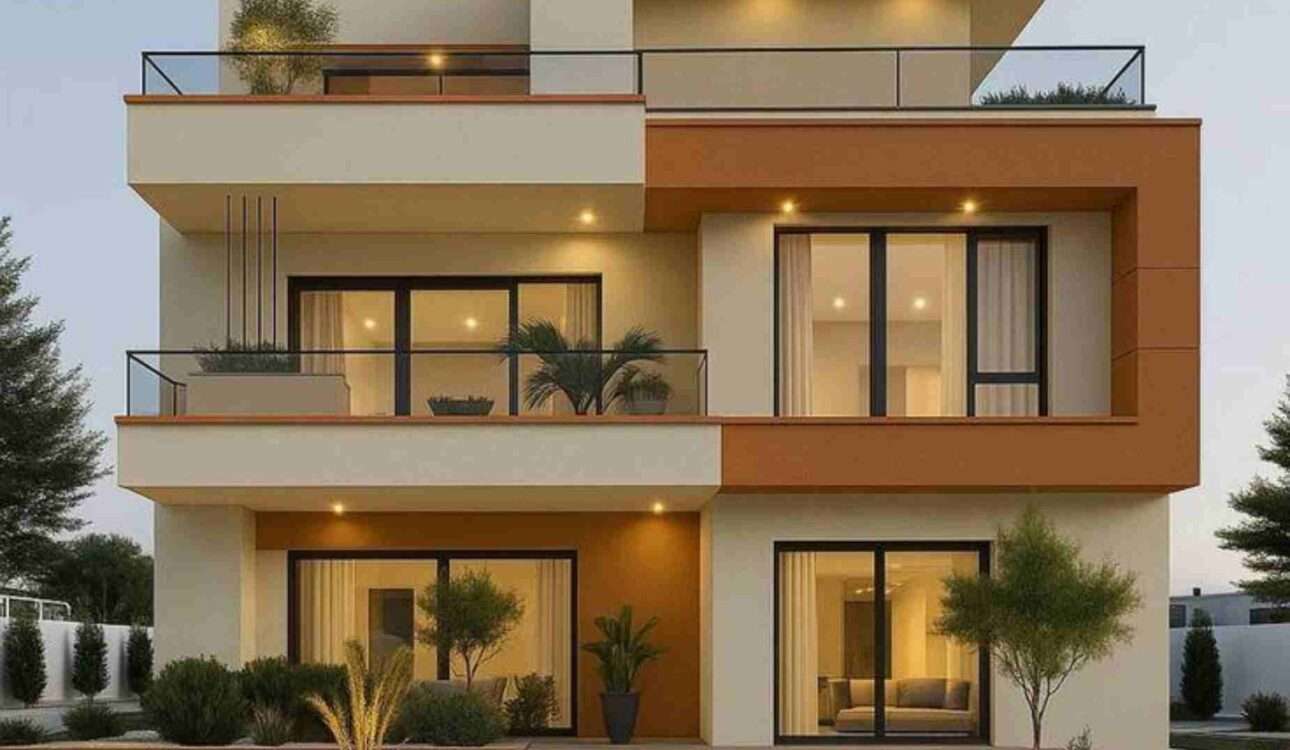
Choosing the right house colour combination in Vizag can completely change the appearance, mood, and perceived value of your home. A well-planned exterior colour scheme can make a small house look more spacious, give a modern home a premium appearance, or add warmth and character to a traditional Indian house.
Vizag, also known as Visakhapatnam, has a distinctive coastal environment. Bright sunlight, humidity, salty air in some locations, dust, and monsoon weather can influence how exterior paint colours look and perform over time. Therefore, selecting a colour should not be based only on current trends. You should also consider the architectural style, amount of natural light, surrounding buildings, maintenance requirements, and quality of exterior paint.
Whether you are constructing a new house, renovating an existing property, or simply planning to repaint your exterior, the right combination of two or three complementary colours can create a much more attractive result.
How to Choose a House Colour Combination in Vizag
Before selecting colours, look at your house as a complete architectural design rather than choosing individual shades separately.
A good exterior colour scheme should coordinate:
- Main exterior walls
- Boundary walls
- Doors and windows
- Balcony railings
- Columns
- Entrance area
- Roof or terrace elements
- Grills and metalwork
- Outdoor lighting
- Landscaping
The goal is to create visual balance.
For example, if your home already has strong architectural elements such as projecting balconies, stone cladding, large windows, or decorative columns, you may want a simpler wall colour combination. On the other hand, a plain elevation can benefit from a stronger accent colour.
Consider Vizag’s Coastal Climate
The coastal environment is an important factor when selecting exterior paint.
Strong sunlight can make some colours appear lighter over time, while moisture and humidity can contribute to dirt, algae, or surface deterioration. Choosing a good-quality exterior coating and preparing the wall properly is therefore just as important as selecting the colour.
For homes exposed to considerable sunlight, neutral and medium-depth shades can provide a timeless appearance. Extremely dark colours can also become visually dominant on large exterior surfaces.
Consider the Size of Your House
Colour can influence how large or compact a house appears.
For small houses:
- Use white, ivory, cream, beige or light grey as the main colour.
- Keep darker shades for trims and architectural details.
- Avoid using several strong colours together.
For large houses:
- You have more freedom to introduce darker accent shades.
- Charcoal, earthy brown, olive, terracotta and deep grey can work well.
- Different colours can highlight different sections of the elevation.
15 Best House Colour Combination in Vizag Ideas
Here are some practical combinations that can work across contemporary, traditional and Indian-style homes.
1. White and Charcoal Grey
White and charcoal grey create a clean and sophisticated exterior.
Use white or off-white for the majority of the walls and charcoal grey around balconies, windows, entrance features or selected architectural sections.
Best for: Modern villas and contemporary houses.
Why it works: The contrast creates a premium appearance without making the exterior overly colourful.
2. Cream and Brown
Cream with warm brown is a timeless combination for Indian homes.
Cream can be used as the primary wall colour while brown highlights doors, windows, columns or decorative areas.
Best for: Traditional and family homes.
This combination also works particularly well with natural stone, wooden doors and warm outdoor lighting.
3. Light Grey and White
If you prefer a minimalist exterior, light grey and white are excellent choices.
The light grey gives the building visual depth while white keeps the elevation bright.
Best for: Modern houses and compact urban homes.
4. Beige and Warm Grey
Beige and warm grey provide a sophisticated neutral palette.
Instead of using a very cool grey, choose a warmer grey that complements the beige.
Best for: Contemporary houses with simple architectural elevations.
5. Off-White and Terracotta
Terracotta adds warmth and an Indian-inspired character to an otherwise neutral exterior.
Use it selectively rather than covering the entire house.
Best for: Indian-style houses, villas and homes with traditional architectural elements.
6. White and Olive Green
Olive green can provide a natural connection between the building and surrounding landscaping.
It works particularly well when the house has a garden, plants, wooden details or natural stone.
Best for: Nature-inspired homes.
7. Sand Beige and Dark Brown
This combination gives an earthy and welcoming appearance.
Sand beige can cover the larger wall surfaces, while dark brown can highlight entrance doors, windows and architectural frames.
Best for: Independent houses and traditional elevations.
8. Pearl White and Slate Grey
Pearl white combined with slate grey gives a contemporary appearance without becoming too dramatic.
It is particularly useful for houses with clean geometric lines.
Best for: Modern elevations.
9. Light Blue and White
A soft blue with white can create a fresh and airy appearance.
Because Vizag has a coastal character, subtle blue shades can complement the environment without becoming overly themed.
Best for: Coastal-inspired and compact homes.
10. Greige and White
Greige combines elements of grey and beige.
It is useful if you want a neutral colour that feels warmer than standard grey.
Best for: Premium modern homes.
Modern House Colour Combination in Vizag
A modern house colour combination in Vizag generally works best when it follows a simple three-level colour hierarchy:
- Primary colour – covers most of the exterior.
- Secondary colour – creates visual separation.
- Accent colour – highlights important architectural features.
For example:
| Primary Colour | Secondary Colour | Accent | Style |
|---|---|---|---|
| Off-white | Charcoal Grey | Warm Wood | Contemporary |
| Beige | Warm Grey | Brown | Elegant |
| White | Slate Grey | Black | Minimalist |
| Light Grey | White | Wood | Modern |
| Cream | Terracotta | Brown | Indian Contemporary |
| Greige | White | Dark Brown | Premium |
The key is restraint. A modern exterior usually looks better with two dominant shades and one subtle accent than with five or six different colours.
Modern Exterior Colour Trends
Some modern approaches that can work particularly well include:
- Neutral monochromatic palettes
- White and charcoal combinations
- Warm grey with wood accents
- Beige and earthy tones
- Minimal black detailing
- Terracotta-inspired accents
- Natural stone combined with neutral paint
- Subtle green shades
- Textured exterior walls
Indian House Colour Combination in Vizag
An Indian house colour combination in Vizag can combine traditional warmth with contemporary design.
Indian homes often feature architectural elements such as:
- Balconies
- Decorative columns
- Main entrance frames
- Jali patterns
- Temple-inspired details
- Wooden doors
- Boundary walls
- Exterior stonework
Instead of making every feature a different colour, use a coordinated palette.
Popular Indian-Inspired Combinations
Cream + Brown + Terracotta
Creates a warm traditional appearance.
Ivory + Maroon + Brown
Suitable for homeowners who prefer stronger traditional accents.
Beige + Olive + Wood
A softer interpretation of Indian-inspired design.
Off-White + Terracotta + Natural Stone
Works particularly well with earthy architectural materials.
How Many Colours Should You Use on a House Exterior?
One of the most common mistakes is using too many colours.
For most residential exteriors, a 60-30-10 approach can be useful:
- 60%: Main wall colour
- 30%: Secondary colour
- 10%: Accent colour
For example, imagine a two-storey modern house:
- 60% warm white
- 30% charcoal grey
- 10% wood or warm gold detailing
This creates hierarchy without making the elevation visually confusing.
Design Tip: Don’t choose three colours simply because you like them individually. Test how they look together under daylight and in the context of your home’s materials.
Best Exterior Colours for Different House Styles
Modern House
Consider:
- White + charcoal
- Light grey + white
- Greige + dark grey
- Beige + charcoal
Keep the design clean and avoid excessive decorative colours.
Traditional Indian House
Consider:
- Cream + brown
- Beige + terracotta
- Ivory + dark brown
- Sand beige + earthy red
Natural materials can enhance these combinations.
Luxury Villa
Consider:
- Off-white + charcoal
- Warm beige + brown
- Pearl white + slate
- Greige + wood
Stone cladding, architectural lighting and premium doors can further enhance the appearance.
Small House
Consider:
- White + light grey
- Cream + beige
- Off-white + soft brown
- Light blue + white
Lighter colours can help the property feel more open.
House Colour Selection: Step-by-Step Guide
Step 1: Study Your House Elevation
Look at the architectural structure before choosing paint.
Identify:
- Large wall surfaces
- Columns
- Balconies
- Windows
- Entrance
- Projections
- Boundary wall
These areas can determine where each colour should be applied.
Step 2: Select the Main Colour
Choose a colour that you can comfortably live with for several years.
Neutral shades such as:
- White
- Cream
- Beige
- Light grey
- Greige
are generally easier to coordinate with other elements.
Step 3: Choose a Secondary Colour
The secondary shade should create contrast without overpowering the main colour.
Grey, brown, taupe, charcoal and muted earthy colours are useful choices.
Step 4: Select an Accent
Use accent colours sparingly.
Good locations include:
- Main door
- Balcony wall
- Entrance frame
- Window surrounds
- Small architectural projections
Step 5: Test Paint Samples
Never rely entirely on a digital colour preview.
Paint a small sample on the actual exterior and observe it at different times of day.
Morning sunlight, afternoon sunlight and evening lighting can make the same shade appear noticeably different.
Step 6: Check the Surroundings
Consider:
- Neighbouring buildings
- Road dust
- Landscaping
- Boundary walls
- Tiles
- Stone
- Wooden elements
- Outdoor lighting
The exterior should feel connected to its surroundings.
House Exterior Colour Checklist
Before finalising your colour combination, check the following:
- Does the main colour suit the architecture?
- Does the secondary colour provide enough contrast?
- Is the accent colour being used sparingly?
- Have you tested the colour outdoors?
- Does it look good in direct sunlight?
- Does it work with your doors and windows?
- Does it coordinate with flooring or stone?
- Have you considered maintenance?
- Does it suit the size of your house?
- Does it complement the boundary wall?
- Have you selected an appropriate exterior paint system?
- Have you considered the local climate?
Matte, Satin or Gloss: Which Finish Is Better?
Colour isn’t the only decision. The finish also affects how your exterior looks.
| Finish | Appearance | Best Use |
|---|---|---|
| Matte | Soft and understated | Large wall surfaces |
| Satin | Slightly refined | Selected exterior areas |
| Gloss | Reflective | Doors and selected details |
| Textured | Decorative | Feature walls |
For large exterior walls, a finish that does not produce excessive glare is generally easier to integrate into an architectural design.
Doors, metal elements and selected architectural details can use different finishes to create contrast.
Common House Colour Mistakes to Avoid
Using Too Many Colours
Multiple bright colours can make the elevation look visually busy.
Choosing Colours Only from a Screen
A colour displayed on a mobile or computer can differ from the actual paint.
Ignoring Natural Light
The same colour may appear completely different under strong sunlight and shade.
Matching Everything
Your walls, doors, windows and boundary wall do not need to be exactly the same colour.
Contrast creates depth.
Choosing Trendy Colours Without Considering Longevity
A fashionable shade may look attractive today but become difficult to live with after several years.
Choose trends that complement a timeless base palette.
Ignoring Surface Condition
Even the best colour combination will not look premium if the plaster is damaged, damp or poorly prepared.
How Professional Interior and Exterior Design Can Improve Colour Selection
Colour selection becomes easier when it is considered as part of the complete architectural design.
A professional design approach can coordinate:
- Exterior paint
- Interior colour palette
- Flooring
- Furniture
- Lighting
- Doors
- Windows
- Landscaping
- Architectural materials
For homeowners planning a complete renovation or new home, this approach can help create a consistent visual identity from the entrance to the interiors.
For a design-focused project in Vizag, SpaceHeaven can be positioned as a professional option for homeowners looking for coordinated interior and home-design solutions.
Best House Colour Combinations at a Glance
If you want a quick starting point, consider these combinations:
For a modern home:
Off-white + charcoal grey + wood
For a traditional Indian home:
Cream + brown + terracotta
For a small house:
White + light grey + soft wood
For a luxury villa:
Warm beige + charcoal + natural stone
For a nature-inspired home:
Off-white + olive green + wood
For a coastal-inspired home:
Soft blue + white + natural beige
Final Thoughts
Choosing the right house colour combination in Vizag is about more than following the latest paint trends. The best combination should complement your home’s architecture, respond well to local sunlight and weather conditions, coordinate with materials, and remain visually appealing for years.
Modern homeowners can explore neutral palettes such as white, charcoal, beige, greige and warm grey, while traditional Indian homes can benefit from cream, brown, terracotta and earthy shades.
Most importantly, test your chosen colours on the actual exterior before making the final decision. A small sample can reveal how the shade behaves under Vizag’s natural daylight and against your home’s existing materials.
A thoughtfully planned colour palette can turn an ordinary elevation into a home that feels welcoming, balanced and visually premium.
Light and neutral colours such as off-white, cream, beige and light grey are versatile choices for homes in Vizag. They can be paired with darker shades such as charcoal, brown or slate grey for contrast.
Popular modern combinations include off-white with charcoal grey, light grey with white, beige with warm grey, and greige with dark grey. Wood or natural stone accents can add warmth.
Cream, ivory, beige, brown, terracotta and earthy shades can work well for Indian-style homes. These colours pair naturally with wooden doors, stone and traditional architectural details.
For most homes, two main colours plus one small accent are enough. Using too many strong colours can make the elevation look cluttered.
Yes. Always test your selected shades on the actual exterior. Observe them in morning, afternoon and evening light before finalising the complete colour scheme.