A wardrobe is more than just a place to store clothes. The right wardrobe design can improve bedroom organization, make better use of available space, and add a refined look to your interiors. Whether you are furnishing a new apartment, renovating your bedroom, or planning a complete home interior, choosing the right wardrobe design in Vizag can make a noticeable difference.
Homes in Vizag range from compact apartments to spacious independent houses, so wardrobe requirements can vary significantly. A design that works perfectly in a large bedroom may not be practical for a compact apartment. Factors such as room size, storage requirements, door style, materials, ventilation, lighting, and budget should therefore be considered before finalizing the design.
From wooden wardrobe design in Vizag to contemporary sliding wardrobes, homeowners have many options to choose from. The key is to select a wardrobe that balances appearance, storage capacity, durability, and everyday convenience.
How to Choose the Right Wardrobe Design in Vizag
Before selecting a wardrobe style, start with the practical requirements of your bedroom.
Consider these questions:
- How much clothing and footwear do you need to store?
- Do you need separate sections for sarees, shirts, trousers, or accessories?
- Is the bedroom compact or spacious?
- Do you prefer sliding or hinged doors?
- Do you need a loft for additional storage?
- Should the wardrobe include drawers?
- Do you want internal LED lighting?
- Which finish matches your bedroom furniture?
- What is your approximate budget?
- Will the wardrobe be floor-to-ceiling?
Answering these questions can prevent common design mistakes and help create a storage solution suited to your lifestyle.
Measure the Available Wall Space
Accurate measurements are the starting point for wardrobe planning. Measure the complete wall length, available height, ceiling height, and depth required for the wardrobe.
Also check for:
- Windows
- Doors
- Electrical switches
- Air-conditioning units
- Ceiling beams
- Skirting
- Bedside tables
- Curtain areas
A wardrobe should not interfere with doors, windows, electrical points, or comfortable movement around the bedroom.
Plan the Internal Storage
The outside appearance of a wardrobe is important, but the internal layout determines how useful it will be.
A practical wardrobe may include:
- Hanging sections
- Long-hanging sections
- Shelves
- Drawers
- Shoe storage
- Accessory compartments
- Luggage storage
- Loft cabinets
- Hidden compartments
For example, someone with many sarees may require a different internal configuration from someone who primarily stores shirts, trousers, and casual clothing.
Popular Wardrobe Styles for Homes in Vizag
There is no single wardrobe style that suits every bedroom. Modern homeowners can choose from several configurations depending on available space and design preferences.
Sliding Wardrobes
Sliding wardrobes are particularly useful when bedroom floor space is limited.
Instead of opening outward like conventional doors, the panels move horizontally along tracks. This reduces the clearance required in front of the wardrobe.
Advantages include:
- Space-efficient operation
- Contemporary appearance
- Suitable for compact bedrooms
- Large continuous storage area
- Can incorporate mirrors
- Multiple finish options
A sliding wardrobe can combine laminate, wood textures, tinted glass, mirrors, or other decorative finishes.
Hinged Door Wardrobes
Hinged wardrobes use conventional doors that open outward.
They remain a practical option for bedrooms with sufficient clearance.
Benefits include:
- Easy access to individual compartments
- Simple hardware configuration
- Flexible internal organization
- Easy maintenance
- Suitable for traditional and contemporary interiors
Hinged doors can also incorporate handles, handleless profiles, decorative panels, mirrors, or contrasting finishes.
Floor-to-Ceiling Wardrobes
Floor-to-ceiling wardrobes maximize vertical storage.
The upper section can be used for items that are not required every day, such as:
- Suitcases
- Blankets
- Seasonal clothing
- Travel bags
- Extra bedding
This approach can make the wardrobe appear more integrated with the bedroom architecture.
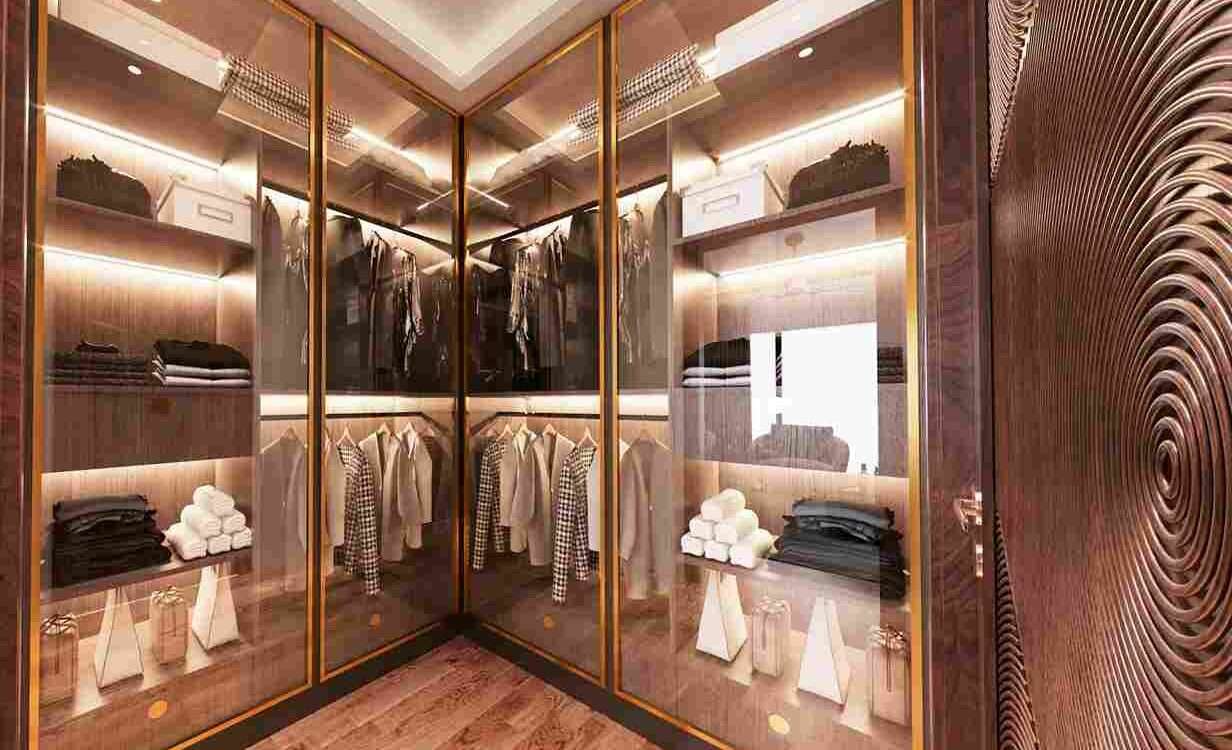
Walk-In Wardrobes
Larger bedrooms may have enough space for a walk-in wardrobe.
A walk-in design can include separate zones for clothing, accessories, footwear, luggage, and dressing.
However, a walk-in wardrobe requires careful planning of circulation space and should not be forced into a room that cannot accommodate it comfortably.
Wooden Wardrobe Design in Vizag
A wooden wardrobe design in Vizag can provide a warm and timeless appearance. Wood-inspired finishes are particularly versatile because they can work with contemporary, traditional, minimalist, and transitional interiors.
There are several ways to introduce a wood appearance.
Natural Wood Appearance
Natural wood textures can bring warmth and visual depth to a bedroom.
Depending on the overall interior scheme, lighter wood tones can create an airy appearance, while darker finishes can produce a richer and more dramatic look.
Wood and Neutral Combination
One popular approach is combining wood textures with neutral surfaces such as:
- White
- Beige
- Grey
- Cream
- Charcoal
- Soft brown
This prevents the wardrobe from appearing visually heavy.
Wood and Glass
Glass panels can be combined with wood-effect cabinetry for a more contemporary appearance.
Depending on the design, glass can be used on selected doors rather than across the entire wardrobe.
Why Consider Wooden Finishes?
Wood-inspired wardrobe finishes can offer:
- Warm appearance
- Versatile styling
- Easy coordination with furniture
- Multiple colour options
- Timeless visual appeal
The exact material should still be selected based on durability, moisture exposure, maintenance requirements, and budget rather than appearance alone.
Modern Wardrobe Design in Vizag
A modern wardrobe design in Vizag typically focuses on clean lines, practical storage, minimal decoration, and coordinated finishes.
Modern wardrobes can use combinations such as:
- Matte laminates
- Gloss finishes
- Wood textures
- Glass
- Mirrors
- Neutral colours
- Minimal handles
- Handleless profiles
- Integrated lighting
A modern wardrobe does not necessarily have to be complicated. In many bedrooms, a simple floor-to-ceiling wardrobe with clean panels can create a more refined appearance than an overly decorative design.
Minimalist Wardrobe Design
Minimalist wardrobes use fewer visual elements.
Typical features include:
- Plain panels
- Limited colour combinations
- Hidden or slim handles
- Consistent finishes
- Simple geometric lines
This approach works especially well when the rest of the bedroom follows a clean, uncluttered style.
Wardrobe With Integrated Lighting
Internal LED lighting can make it easier to locate clothing and accessories, particularly inside deep compartments.
Lighting can be planned around:
- Hanging sections
- Drawers
- Shelves
- Dressing areas
Motion-sensor lighting can also reduce the need to manually operate switches.
Sliding vs Hinged Wardrobes: Which One Fits Your Bedroom?
| Feature | Sliding Wardrobe | Hinged Wardrobe |
|---|---|---|
| Space requirement | Lower front clearance | Requires door-opening clearance |
| Appearance | Contemporary | Traditional to modern |
| Access | Sections depend on panel position | Direct access to each door section |
| Compact bedrooms | Often suitable | Needs sufficient clearance |
| Mirror integration | Easy | Also possible |
| Maintenance | Track requires attention | Hinges require attention |
| Customization | High | High |
Neither option is universally better. The correct choice depends on the room layout and how the wardrobe will be used.
Wardrobe Storage Planning: What Should Go Inside?
A well-designed wardrobe should reflect your actual storage habits.
Everyday Clothing Section
Keep frequently used clothing at an easily reachable height.
For example:
- Shirts
- T-shirts
- Trousers
- Daily wear
- Office clothing
Long-Hanging Section
Long-hanging areas can be useful for:
- Dresses
- Sarees
- Coats
- Long garments
Drawers
Drawers are useful for smaller items such as:
- Watches
- Belts
- Socks
- Innerwear
- Accessories
Shoe Storage
If footwear is stored inside the wardrobe, dedicate a separate section to it rather than mixing shoes with clothing.
Loft Storage
A loft can provide additional capacity without increasing the wardrobe’s floor footprint.
Use it for less frequently accessed items.
How to Plan a Wardrobe Step by Step
Step 1: Understand Your Bedroom Layout
Identify the available wall and check nearby doors, windows, electrical points, and furniture.
Step 2: List Your Storage Requirements
Create separate categories for clothing, accessories, shoes, luggage, bedding, and seasonal items.
Step 3: Choose the Door Configuration
Decide whether sliding or hinged doors make more sense for your room.
Step 4: Select the Exterior Style
Choose between wood textures, solid colours, glass, mirrors, matte finishes, or combinations.
Step 5: Design the Internal Layout
Allocate space according to how frequently each item is used.
Step 6: Select Hardware
Consider hinges, drawer channels, handles, sliding mechanisms, and other fittings based on expected usage.
Step 7: Plan Lighting
Determine whether internal lighting or dressing-area lighting is required.
Step 8: Review the Complete Design
Before fabrication, check dimensions, door movement, storage sections, finishes, electrical points, and surrounding furniture.
Wardrobe Materials and Finishes
The material selected for a wardrobe affects appearance, durability, maintenance, and cost.
| Material/Finish | Typical Characteristics | Suitable For |
|---|---|---|
| Wood-look laminate | Versatile and practical | Modern & warm interiors |
| Solid-colour laminate | Clean appearance | Minimalist bedrooms |
| Glass | Contemporary visual element | Feature wardrobes |
| Mirror | Creates a reflective surface | Compact bedrooms/dressing areas |
| Veneer | Natural wood appearance | Premium interiors |
| Acrylic/high-gloss finish | Smooth reflective appearance | Contemporary spaces |
The best choice depends on the complete interior design rather than selecting a material in isolation.
Common Wardrobe Design Mistakes to Avoid
Even an attractive wardrobe can become inconvenient if the planning stage is overlooked.
1. Ignoring Room Circulation
A wardrobe should leave enough space for comfortable movement and door operation.
2. Using the Same Shelf Height Everywhere
Different clothing categories require different storage arrangements.
3. Forgetting Vertical Space
If the ceiling height permits, upper storage can significantly increase capacity.
4. Choosing Appearance Over Function
A beautiful exterior cannot compensate for poor internal organization.
5. Not Considering Electrical Points
Switches and sockets should remain accessible after installation.
6. Using Too Many Different Finishes
Combining too many colours, textures, and materials can make the bedroom visually busy.
7. Forgetting Future Storage Needs
A wardrobe designed only for today’s belongings may become insufficient later.
Wardrobe Design Checklist
Before finalizing your wardrobe, review this checklist:
- Wall measurements confirmed
- Ceiling height measured
- Door/window positions checked
- Bed and furniture positions considered
- Sliding or hinged configuration selected
- Internal storage planned
- Hanging space included
- Drawers included where required
- Shoe storage considered
- Loft storage considered
- Material selected
- Exterior finish selected
- Hardware discussed
- Lighting requirements planned
- Electrical points checked
- Future storage needs considered
- Final dimensions reviewed
How Much Does Wardrobe Design Cost in Vizag?
The cost of a wardrobe can vary considerably depending on its size, material, internal configuration, hardware, finish, door mechanism, and customization.
Instead of relying on a single per-square-foot figure, compare quotations based on what is actually included.
Ask whether the quoted price covers:
- Board/material
- Exterior finish
- Internal shelves
- Drawers
- Hardware
- Sliding mechanism
- Handles
- Mirrors or glass
- Lighting
- Installation
- Transportation
- Warranty or service
How to Select a Wardrobe Designer in Vizag
If you are planning a customized wardrobe, discuss the project with an interior designer or wardrobe specialist before fabrication.
Look for a professional who can explain:
- Space planning
- Material options
- Storage configuration
- Hardware choices
- Finishes
- Installation process
- Maintenance requirements
- Project timeline
- Warranty/service terms
Ask to see relevant completed projects rather than choosing solely from photographs of generic wardrobe designs.
For homeowners planning a complete bedroom or home interior, the wardrobe should also coordinate with the flooring, wall colours, bed, bedside units, lighting, and other furniture.
Final Thoughts on Wardrobe Design in Vizag
The right wardrobe design in Vizag should combine storage efficiency with a style that complements your bedroom. Compact rooms may benefit from sliding configurations and vertical storage, while larger bedrooms can accommodate wider hinged wardrobes or dedicated dressing areas.
For homeowners who prefer a warm aesthetic, a wooden wardrobe design in Vizag can provide a timeless appearance. If you prefer clean lines and contemporary styling, a modern wardrobe design in Vizag can combine minimal panels, neutral colours, glass, mirrors, wood textures, and integrated lighting.
Most importantly, don’t choose a wardrobe based only on its exterior appearance. Think about how you use your clothes, accessories, footwear, luggage, and everyday items. A carefully planned internal layout can make the wardrobe much more useful for years to come.
If you’re planning a new bedroom or complete home interior in Vizag, a customized wardrobe can be designed around your available space, storage requirements, and preferred interior style.
Sliding wardrobes are often considered for compact bedrooms because their doors do not require the same outward opening clearance as hinged doors. Floor-to-ceiling storage can also help maximize vertical space.
Wood-look finishes and natural wood-based options can create a warm and versatile bedroom appearance. The appropriate material should be selected according to durability, maintenance, moisture exposure, and budget.
It depends on the room layout and personal preference. Sliding wardrobes can be useful where front clearance is limited, while hinged wardrobes provide direct access to individual compartments.
Divide the wardrobe into dedicated zones for hanging clothes, folded clothes, accessories, footwear, and less frequently used items. Drawers, adjustable shelves, and loft storage can further improve organization.
Start with your bedroom dimensions and storage requirements, then select a door configuration, material, colour palette, and internal layout that complement the rest of your interior. A simple design with coordinated finishes often creates a clean modern appearance.