A puja room is more than a dedicated corner for prayer. It can become a peaceful part of your home where design, functionality, tradition, and personal style come together. With thoughtful planning, even a compact apartment can have a beautiful and practical prayer space.
For homeowners looking for puja room design in Vizag, the right design depends on the available space, home layout, storage requirements, lighting, materials, and the overall interior style. From traditional wooden mandirs to contemporary wall-mounted units, there are many ways to create a prayer area that feels elegant without making the room look crowded.
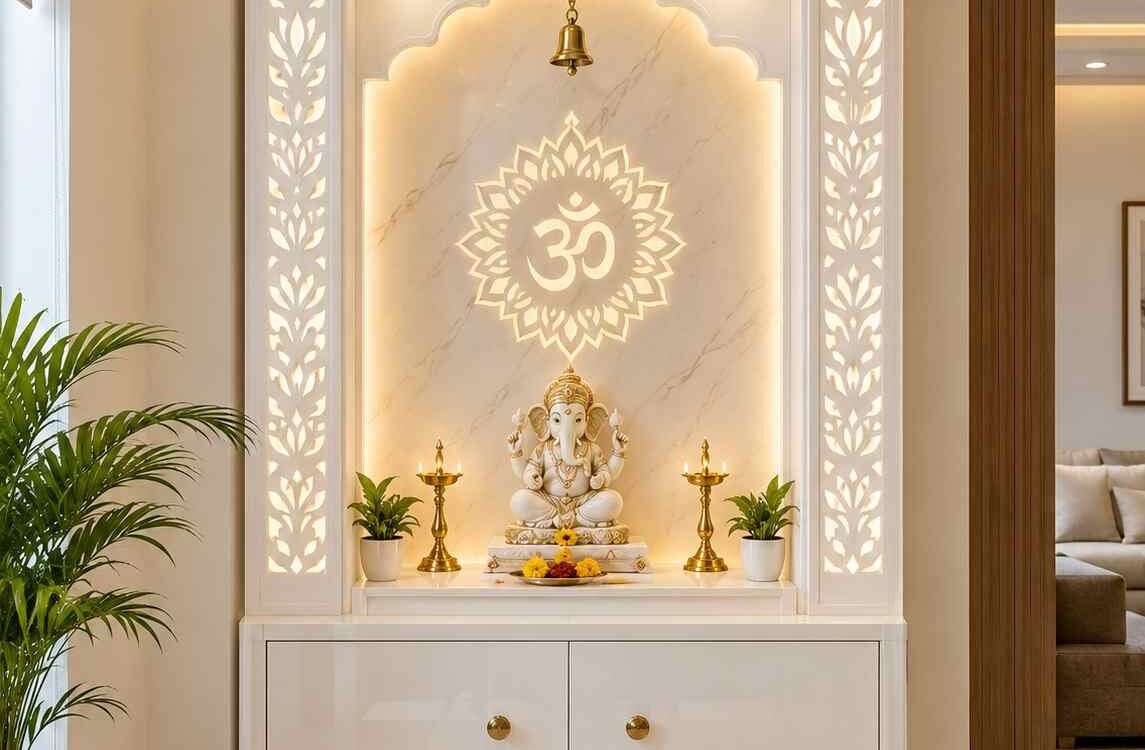
In modern homes, a dedicated puja room is not always possible. A cleverly designed niche, hallway corner, living-room partition, or Wall mounted Puja Mandir for Home can provide a practical alternative while maintaining a peaceful atmosphere.
Why Puja Room Design Matters in a Modern Home
A well-designed puja space should feel calm, organized, and visually connected to the rest of the home. The objective is not simply to place a mandir against a wall but to create a dedicated area with appropriate storage, lighting, ventilation, and easy maintenance.
A thoughtfully planned puja area can offer:
- A dedicated place for daily prayers and rituals
- Organized storage for puja essentials
- Better use of unused corners or wall space
- A visually attractive feature within the home
- Easy cleaning and maintenance
- A peaceful atmosphere for meditation and prayer
For apartments and compact homes in Vizag, space-efficient designs can be particularly useful.
Popular Puja Room Design Ideas in Vizag
There is no single design that works for every home. Your choice should complement your home’s architecture and interior theme.
Here are some popular approaches to consider.
1. Traditional Wooden Puja Room
Wood remains a popular material for Indian prayer spaces because it brings warmth and a timeless appearance.
A traditional wooden mandir can include:
- Carved decorative panels
- Small storage drawers
- Jaali-style doors
- Brass hardware
- Bell details
- Warm lighting
- Raised platforms
Teak, veneer, or other suitable wood finishes can be selected according to the home’s interior palette and budget.
A wooden design works particularly well when the rest of the home already features natural wood furniture.
2. Wall Mounted Puja Mandir for Home
A Wall mounted Puja Mandir for Home is an excellent option when floor space is limited.
Instead of occupying a large section of the floor, the mandir is attached to the wall and can incorporate shelves, drawers, decorative panels, and lighting.
This approach is suitable for:
- Apartments
- Small living rooms
- Compact bedrooms where permitted by the home’s layout
- Hallways
- Dedicated prayer niches
- Modern homes with limited floor space
The surrounding wall can be finished with wood, marble-look surfaces, fluted panels, CNC-cut designs, or subtle decorative elements.
3. Modern Minimalist Puja Unit
If your home has a contemporary interior, a minimalist prayer unit can maintain visual consistency.
A modern design may feature:
- Clean geometric lines
- Neutral colours
- Simple wooden panels
- Integrated LED lighting
- Minimal decoration
- Hidden storage
The design should avoid excessive visual elements if the surrounding home follows a minimalist aesthetic.
4. Puja Niche in a Wall
A built-in niche can turn an unused wall section into a dedicated prayer space.
The niche can be framed with:
- Wood
- Marble
- Stone-finish materials
- Decorative panels
- CNC screens
- Soft lighting
This is particularly useful when homeowners want the mandir to look integrated into the architecture rather than appearing as a separate piece of furniture.
5. Puja Room with Jaali Partition
A jaali partition can provide a sense of separation without completely closing the prayer area.
It can be used between:
- Living room and puja space
- Dining area and prayer area
- Entrance and prayer niche
The open pattern allows light to pass through while creating a visual boundary.
This solution can be especially useful in open-plan apartments.
How to Plan a Puja Room in a Small Home
Small homes require careful planning because every centimetre matters.
Before choosing a design, measure:
- Available wall width
- Floor-to-ceiling height
- Depth available for the mandir
- Door and window positions
- Electrical points
- Storage requirements
- Circulation space around the unit
Avoid creating a mandir that blocks doors, windows, walkways, or important furniture.
Small-Space Design Checklist
Use this checklist before finalizing your design:
- Measure the available wall
- Check electrical points
- Decide whether floor or wall mounting is better
- Plan idol placement
- Include storage for essentials
- Select easy-to-clean materials
- Plan suitable lighting
- Maintain comfortable access
- Coordinate colours with the existing interiors
- Keep the surrounding area uncluttered
Choosing Materials for Puja Room Design
Material selection affects both appearance and maintenance.
| Material | Appearance | Maintenance | Suitable Style |
|---|---|---|---|
| Natural wood | Warm and traditional | Moderate | Traditional / Luxury |
| Veneer | Elegant and versatile | Easy to moderate | Modern / Contemporary |
| Marble | Premium and timeless | Moderate | Classic / Luxury |
| Glass | Light and modern | Requires regular cleaning | Contemporary |
| CNC panels | Decorative | Moderate | Modern / Traditional |
| Laminate | Wide range of finishes | Easy | Budget-friendly / Modern |
| Stone finishes | Natural and sophisticated | Moderate | Contemporary / Luxury |
The best material depends on your budget, cleaning requirements, existing furniture, and desired visual style.
Lighting Ideas for a Puja Room
Lighting can completely change the atmosphere of a prayer space.
Instead of depending on one bright light, consider combining different types of illumination.
Ambient Lighting
Soft ambient lighting creates an even glow around the prayer area.
Warm-toned illumination can help create a calm visual environment while complementing wooden finishes.
Accent Lighting
Accent lights can highlight:
- Idol back panels
- Decorative carvings
- Jaali patterns
- Shelves
- Architectural niches
LED strips can be integrated behind panels or shelves to create a subtle layered effect.
Task Lighting
If the prayer area includes a space for reading religious texts or performing detailed rituals, adequate focused lighting can improve visibility.
Important: Avoid placing electrical fittings where heat, oil lamps, incense, or other ritual activities could create a safety concern. Electrical planning should be handled carefully.
Colour Ideas for Puja Room Interiors
The colour palette should support the peaceful character of the space while complementing the surrounding interior.
Popular options include:
- Off-white
- Cream
- Beige
- Light wood
- Soft yellow
- Warm neutral shades
- Marble-inspired white
- Muted earthy tones
For a more contemporary appearance, a neutral backdrop with natural wood can create a balanced combination.
Gold or brass-coloured accents can also be introduced through decorative details rather than covering the entire space in metallic finishes.
Storage Ideas for a Functional Puja Space
A beautiful mandir should also be practical.
Depending on available space, storage can be incorporated into:
- Lower drawers
- Floating shelves
- Closed cabinets
- Side compartments
- Small pull-out drawers
- Concealed storage sections
Use separate storage for items such as prayer books, incense, lamps, cotton wicks, containers, and other daily-use accessories.
Closed storage is useful for keeping the surrounding area visually clean.
How to Choose the Right Puja Room Location
When planning a prayer space, consider the home’s layout and your family’s requirements.
A suitable location should ideally be:
- Easy to access
- Away from unnecessary clutter
- Comfortable for daily use
- Properly ventilated
- Convenient for cleaning
- Visually connected to the home’s interior design
Many homeowners also consider traditional Vastu principles while deciding the location and orientation of a puja room. Since Vastu practices can vary, homeowners who follow them may wish to consult a qualified practitioner alongside their architect or interior designer.
The practical requirements of the home should also be considered before finalizing the layout.
Puja Room Design: Traditional vs Modern
Both traditional and modern designs can create beautiful prayer spaces.
| Feature | Traditional Puja Design | Modern Puja Design |
|---|---|---|
| Main material | Wood | Wood, veneer, glass, laminates |
| Decoration | Carving, jaali, ornamental details | Clean lines and subtle details |
| Lighting | Lamps and warm illumination | Integrated LED lighting |
| Storage | Visible or concealed | Mostly concealed |
| Appearance | Rich and decorative | Minimal and refined |
| Space requirement | Can require more space | Works well in compact spaces |
The right choice depends on your home’s architecture and your personal preferences.
Step-by-Step Guide to Designing a Puja Room in Vizag
Step 1: Measure the Space
Start by measuring the wall, floor area, ceiling height, and nearby furniture.
Do not select a mandir based only on photographs. A design that looks spacious online may feel crowded in your actual home.
Step 2: Decide on the Format
Choose between:
- Freestanding mandir
- Wall-mounted mandir
- Built-in niche
- Dedicated puja room
- Partitioned prayer area
For smaller homes, wall-mounted and niche designs can be particularly space-efficient.
Step 3: Select the Design Style
Match the mandir with the home’s overall interior.
For example:
- Modern home → minimalist puja unit
- Classic home → carved wooden mandir
- Luxury interior → marble and premium wood combination
- Compact apartment → wall-mounted design
Step 4: Plan Storage
Decide what needs to be stored before finalizing cabinet sizes.
This prevents the prayer area from becoming cluttered later.
Step 5: Plan Lighting
Determine where ambient, accent, and functional lighting will be placed.
Make sure electrical planning is completed before the final installation.
Step 6: Select Materials and Finishes
Choose materials that are visually suitable and easy to maintain.
Consider durability, cleaning, moisture exposure, and compatibility with the existing interior.
Step 7: Add Personal Details
Small details can make the prayer space feel unique.
Consider:
- Brass accessories
- Bells
- Decorative panels
- Subtle floral motifs
- Traditional patterns
- Personal artwork
Avoid adding too many decorative elements if the space is already compact.
Common Mistakes to Avoid
Even an attractive puja design can become inconvenient if the planning is rushed.
Oversized Mandir
A large unit can dominate a small room and reduce circulation space.
Insufficient Storage
Without storage, frequently used puja items can accumulate around the mandir.
Poor Lighting
A dark prayer area may look visually dull and make rituals less convenient.
Difficult-to-Clean Surfaces
Highly detailed surfaces can require more maintenance. Consider how easily dust, oil, and incense residue can be cleaned.
Ignoring the Existing Interior
The mandir should feel connected to the overall home rather than looking like an unrelated addition.
Too Much Decoration
A prayer area can become visually overwhelming when every surface contains decorative elements.
How an Interior Designer Can Help
Professional interior planning can be useful when the puja area needs to integrate with a larger home renovation.
An interior designer can help coordinate:
- Space planning
- Material selection
- Storage
- Lighting
- Wall treatments
- Custom furniture
- Electrical planning
- Overall interior styling
For homeowners searching for puja room design in Vizag, professional guidance can be particularly helpful when the prayer space needs to be incorporated into a living room, apartment, villa, or complete home interior.
Quick Summary: Puja Room Design in Vizag
A successful puja room should balance tradition, functionality, aesthetics, and available space.
Before starting the project:
- Measure the available area
- Select a suitable design format
- Consider a wall-mounted mandir for compact homes
- Plan storage carefully
- Use warm and functional lighting
- Choose durable, easy-to-clean materials
- Coordinate the design with your existing interiors
- Consider traditional preferences such as Vastu if important to your family
- Keep the final space peaceful and uncluttered
The best puja room design in Vizag is not necessarily the largest or most decorative one. It is a design that fits naturally into your home, supports your daily rituals, and remains practical for years to come.
A wall-mounted mandir, built-in niche, or compact floating prayer unit can work well in a small home because it uses wall space efficiently while keeping the floor area open.
Yes. A Wall mounted Puja Mandir for Home can be a practical option for apartments where a separate prayer room is not available. The design should be properly anchored and planned around electrical points, walls, and nearby furniture.
Wood, veneer, laminate, marble, glass, and decorative panels can all be used depending on the desired style, budget, maintenance requirements, and existing interior design.
Use a compact wall-mounted design, light colours, integrated storage, simple decorative details, and layered lighting. Avoid oversized furniture and excessive decoration.
Homeowners who follow Vastu may consider its principles while planning the location and orientation of the prayer area. Since practices and interpretations vary, it can be useful to discuss these preferences with an appropriate Vastu consultant while coordinating with an interior professional.