
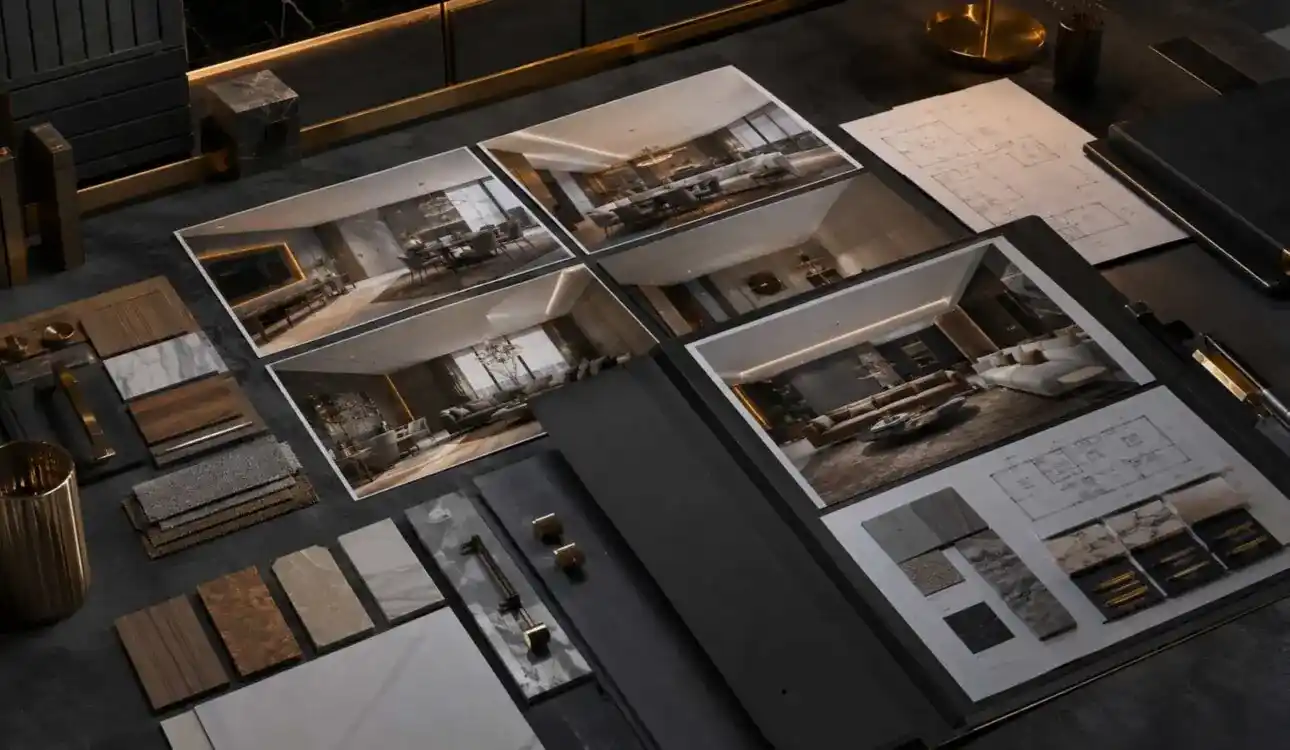
An interior design portfolio is more than a collection of attractive room photographs. It is a visual presentation of your creativity, design process, technical skills, problem-solving ability, and professional experience. Whether you are a student, freelancer, beginner, or experienced interior designer, a well-planned portfolio can help you attract clients, secure jobs, win projects, and build credibility.
If you are wondering how to make an interior design portfolio, the best approach is to combine strong project visuals with a clear story. Your portfolio should show not only what you designed but also how you approached the project, solved challenges, selected materials, and transformed the client’s requirements into a functional space.
This guide explains how to create an interior design portfolio from scratch, what to include, how to structure each project, which portfolio format to choose, and how to make your work more convincing to potential clients.
Why Is an Interior Design Portfolio Important?
Interior design is a highly visual profession. Clients often want to see evidence of your design ability before discussing a project with you.
A strong portfolio helps answer important questions such as:
- What type of interiors do you design?
- What is your design style?
- Can you work within different budgets?
- Do you understand space planning?
- Can you solve practical design problems?
- What materials and finishes do you work with?
- Can you manage a project from concept to completion?
- Have you worked on projects similar to mine?
Your portfolio therefore acts as a visual résumé and sales tool.
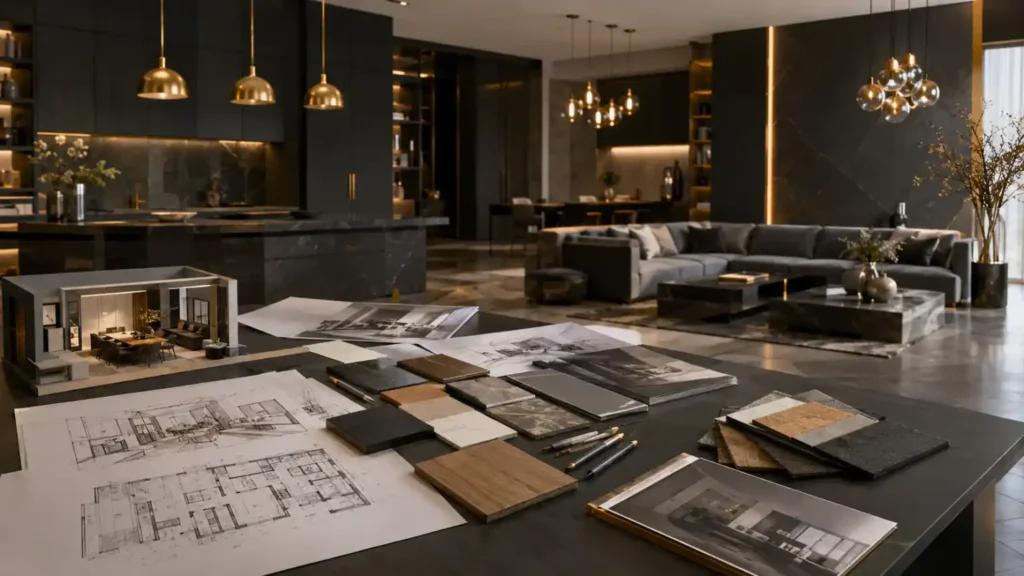
What Should an Interior Design Portfolio Include?
Before designing your portfolio, prepare the content you want to showcase.
A professional portfolio can include:
- Cover page
- Short introduction
- About the designer or studio
- Design philosophy
- Selected projects
- Project descriptions
- Before-and-after images
- Floor plans
- 3D visualizations
- Mood boards
- Material and color palettes
- Furniture selections
- Technical drawings
- Construction details
- Design process
- Client requirements
- Project results
- Services offered
- Contact information
You do not need to include every item in every portfolio. Select elements that demonstrate your actual skills and are relevant to your target audience.
How to Make an Interior Design Portfolio Step by Step
1. Define Your Portfolio’s Purpose
The first step is deciding why you are creating the portfolio.
Your objective could be to:
- Get an interior design job
- Apply for an internship
- Attract residential clients
- Win commercial projects
- Promote a design studio
- Showcase student projects
- Build a freelance business
- Present your work online
Your purpose should influence which projects you include.
For example, if you want residential clients, showcase bedrooms, kitchens, living rooms, apartments, villas, and complete home transformations.
If you want commercial clients, emphasize offices, retail spaces, restaurants, hospitality interiors, clinics, or other commercial environments.
2. Choose Your Best Projects
One of the most important steps in creating an interior designer portfolio is project selection.
Do not automatically include every project you have completed.
Instead, choose projects that demonstrate different skills while maintaining a consistent professional identity.
For each project, consider:
- Visual quality
- Design originality
- Complexity
- Functionality
- Space planning
- Material selection
- Technical knowledge
- Problem-solving
- Client requirements
- Final results
A useful portfolio might contain between 5 and 10 carefully selected projects, depending on your experience.
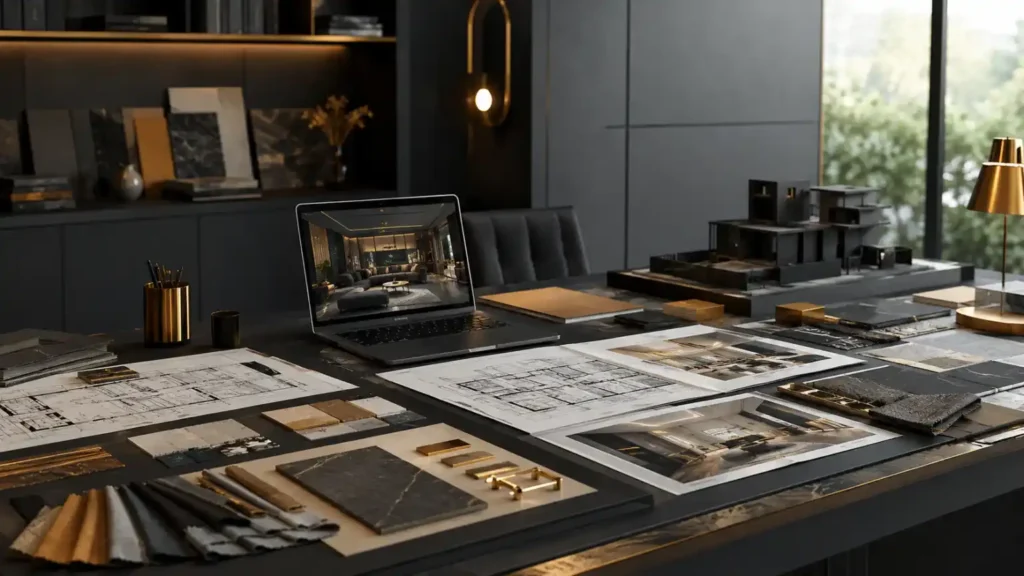
What If You Are a Beginner?
You do not need dozens of completed client projects.
Students and beginners can include:
- Academic projects
- Personal room redesigns
- Concept interiors
- 3D visualization projects
- Practice projects
- Furniture design
- Material studies
- Mood boards
- Space-planning exercises
The important thing is to clearly identify conceptual or academic work rather than presenting it as completed client work.
3. Create a Strong Project Story
A common mistake is showing beautiful photographs without explaining the project.
Instead, treat every project as a short case study.
A simple structure is:
Client Requirement → Design Challenge → Design Concept → Planning → Materials → Execution → Final Result
For example:
Project: Modern 3-Bedroom Apartment
Requirement: The client wanted a contemporary home with generous storage and a warm atmosphere.
Challenge: The apartment had limited floor space and several areas required multifunctional furniture.
Solution: The design used built-in storage, neutral finishes, layered lighting, and carefully planned furniture placement.
Result: The final design created a visually spacious interior while increasing practical storage capacity.
This approach demonstrates your thinking rather than simply your photography skills.
4. Use High-Quality Images
Images are one of the most important elements of an interior design portfolio.
Use the highest-quality visuals available, including:
- Professional photographs
- High-quality 3D renders
- Before-and-after images
- Detailed material shots
- Furniture details
- Lighting photographs
- Architectural drawings
- Floor plans
- Elevations
- Mood boards
Avoid uploading blurry, poorly cropped, excessively compressed, or inconsistent images.
How Many Images Should You Use Per Project?
There is no universal number, but approximately 5–10 carefully selected visuals can work well for a detailed project.
Use different images to communicate different aspects of the design rather than repeating nearly identical views.
For example:
- Main room view
- Secondary perspective
- Detail shot
- Material close-up
- Floor plan
- Mood board
- Before-and-after comparison
5. Show Your Design Process
One of the best ways to make your portfolio more credible is to show how you arrived at the final design.
Potential clients and employers want to understand your process.
You can show:
Research → Concept → Mood Board → Space Planning → 3D Visualization → Material Selection → Technical Drawings → Execution → Final Space
This is especially valuable for students and junior designers because it demonstrates design thinking even when professional project experience is limited.
What Design Process Elements Can You Show?
Include relevant examples such as:
- Initial sketches
- Client brief
- Site measurements
- Space-planning diagrams
- Concept sketches
- Mood boards
- Color palettes
- Furniture layouts
- Material samples
- Lighting concepts
- 3D models
- Rendered views
- Technical drawings
Do not overcrowd every project with technical information. Select the elements that best demonstrate your expertise.
6. Include Project Information
Every portfolio project should provide enough context for the viewer to understand the work quickly.
A useful project information box can include:
| Project Detail | Example |
|---|---|
| Project Type | Residential Interior |
| Location | Delhi, India |
| Area | 1,800 sq. ft. |
| Scope | Complete Interior Design |
| Style | Contemporary |
| Role | Interior Designer |
| Services | Concept, Planning, Materials & Execution |
| Status | Completed |
Only include information that is accurate and that you are comfortable publishing.
7. Explain Your Role Clearly
If you worked as part of a design team, explain exactly what you contributed.
For example:
- Concept development
- Space planning
- 3D visualization
- Material selection
- Furniture design
- Client presentations
- Vendor coordination
- Site supervision
- Technical drawings
This is particularly important for employees, interns, and designers who have contributed to larger projects.
Do not imply that you personally completed work that was actually performed by a team.
8. Select the Right Interior Design Portfolio Format
There are several ways to present your portfolio.
PDF Portfolio
A PDF is one of the easiest formats for job applications, client presentations, and email sharing.
Advantages:
- Easy to send
- Easy to download
- Can be professionally designed
- Works well for applications
- Can combine images and text
Best for: Students, job seekers, freelancers, and client proposals.
Website Portfolio
A website provides a stronger long-term online presence.
You can create separate pages for:
- Residential interiors
- Commercial interiors
- Modular kitchens
- Living rooms
- Bedrooms
- Office interiors
- Hospitality projects
- About
- Services
- Contact
A website also gives you more opportunities to attract organic search traffic.
Best for: Freelancers, studios, agencies, and established interior designers.
Printed Portfolio
A printed portfolio can be useful during face-to-face meetings, interviews, and presentations.
Use high-quality printing and professional paper because physical presentation affects how your work is perceived.
Social Media Portfolio
Platforms such as Instagram, Pinterest, Behance, and LinkedIn can supplement your main portfolio.
However, social media should generally support—not replace—a professional portfolio.
Interior Design Portfolio Format Comparison
| Format | Best For | Main Advantage | Limitation |
|---|---|---|---|
| Applications & proposals | Easy to share | Limited interactivity | |
| Website | Business & SEO | Search visibility | Requires maintenance |
| Printed Book | Meetings & interviews | Premium physical experience | Printing cost |
| Social Media | Visibility | Easy content distribution | Less control over presentation |
| Online Portfolio Platform | Beginners | Simple setup | Platform limitations |
9. Create an Interior Design Portfolio Template
A consistent template can make portfolio creation much easier.
A simple structure could look like this:
Page 1: Cover
Include:
- Name or studio name
- Interior Designer
- Selected Works
- Professional image
Page 2: About
Write a short introduction explaining:
- Who you are
- Your design approach
- Your specialization
- Your experience
- What type of clients you serve
Page 3: Design Philosophy
Explain what influences your work.
For example, you might focus on:
- Functional layouts
- Minimalism
- Sustainable materials
- Luxury interiors
- Biophilic design
- Contemporary architecture
Pages 4–8: Project One
Show:
- Project overview
- Main visual
- Design concept
- Floor plan
- Materials
- Supporting images
- Final result
Pages 9–13: Project Two
Repeat the same basic structure while adapting the content to the project.
Final Page: Contact
Include:
- Name
- Phone
- Website
- Social media
- Location or service area
Keep the contact page simple and easy to scan.
10. Use a Consistent Visual Design
Your portfolio itself should demonstrate your design skills.
Maintain consistency across:
- Typography
- Font sizes
- Margins
- Image sizes
- Color palette
- Page layouts
- Headings
- Captions
- Alignment
Avoid using too many fonts or decorative elements.
The portfolio should support your projects—not compete with them.
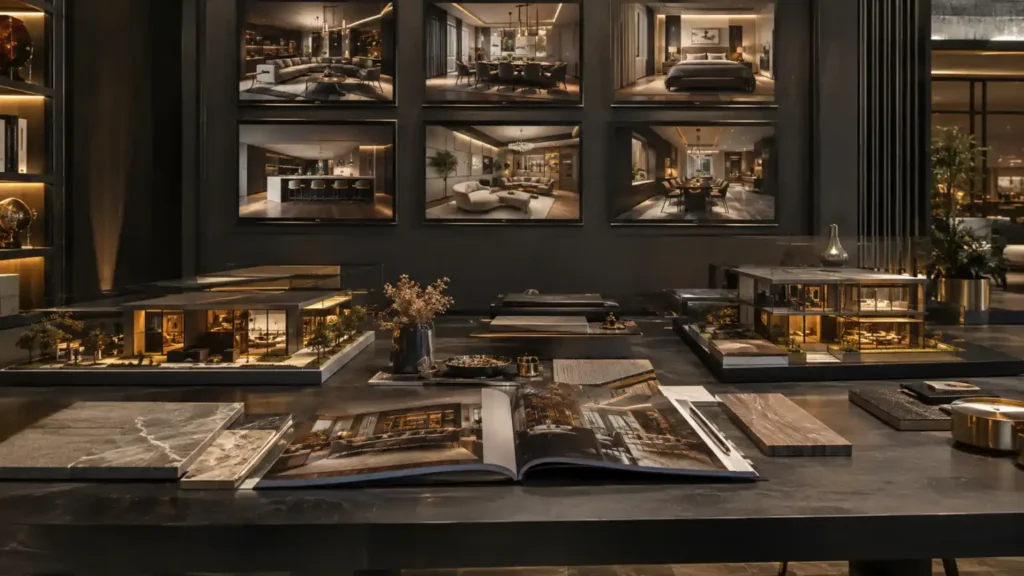
Interior Design Portfolio Checklist
Before publishing your portfolio, review the following:
- Strong cover page
- Clear professional introduction
- Defined design specialization
- Best projects selected
- High-quality images used
- Project descriptions included
- Design process demonstrated
- Your role clearly explained
- Floor plans included where relevant
- Materials and finishes shown
- Consistent typography
- Consistent page spacing
- No spelling or grammar errors
- Contact details included
- Portfolio optimized for mobile if online
- Images compressed appropriately for web
- Testimonials included where appropriate
- Portfolio reviewed before sending
Interior Design Portfolio Examples: What Makes Them Effective?
When looking at interior design portfolio examples, do not focus only on visual aesthetics. Analyze how effectively the portfolio communicates information.
A strong example typically demonstrates:
Clear Project Organization
The viewer should immediately know which project they are looking at.
Strong Visual Hierarchy
The most important image should receive the greatest visual attention.
Meaningful Descriptions
Text should explain the challenge, concept, process, or result instead of simply stating that a room is “beautiful” or “modern.”
Evidence of Expertise
Floor plans, material selections, technical drawings, renderings, and completed photographs can demonstrate different levels of professional knowledge.
Consistent Branding
The portfolio should have a recognizable visual identity without overwhelming the actual design work.
How to Make Your Portfolio More Client-Focused
A portfolio designed exclusively around your personal preferences may not convert visitors into clients.
Instead, think about what your ideal customer wants to see.
For example, a homeowner may want to know:
- Can you design within my budget?
- Can you maximize a small space?
- Can you create enough storage?
- Can you manage contractors?
- Can you complete the project on schedule?
- Do you understand my preferred style?
A commercial client may be more interested in:
- Space efficiency
- Brand integration
- Workplace functionality
- Material durability
- Project management
- Technical coordination
Tailor your portfolio to the type of work you want to win.
How to Optimize an Online Interior Design Portfolio for SEO
If your portfolio is hosted on a website, SEO can help potential clients discover your work through search engines.
Use Descriptive Project Titles
Instead of:
Project 01
Use:
Modern 3-Bedroom Apartment Interior Design in Delhi
This gives users and search engines more meaningful context.
Optimize Image Alt Text
Describe what the image actually shows.
Poor:
image1.jpg
Better:
Modern living room interior with custom TV unit and warm lighting
Avoid stuffing keywords into every image.
Create Individual Project Pages
Instead of putting every project on one page, consider creating dedicated case-study pages.
Each page can target a specific topic, project type, location, or design style.
Improve Page Speed
Large architectural images can significantly increase page load times.
Use appropriately sized images and modern compression techniques without sacrificing visible quality.
How to Make an Interior Design Portfolio Stand Out
A portfolio becomes memorable when it communicates a clear point of view.
Here are practical ways to improve it:
Show Before and After
Transformation images immediately communicate the value of your work.
Explain the Problem You Solved
Do not only show the final room. Explain what was difficult about the project.
Include Real Project Constraints
Budget, space limitations, storage requirements, structural restrictions, or client preferences can make a project story more interesting.
Highlight Results
Where appropriate, explain measurable or meaningful outcomes, such as improved storage, better circulation, more usable space, or successful completion of a renovation.
Include Testimonials
A short genuine client testimonial can strengthen trust, particularly for freelance designers and studios.
Common Interior Design Portfolio Mistakes to Avoid
Including Too Many Projects
More projects do not automatically mean more credibility.
Using Low-Quality Images
Poor visuals can undermine otherwise excellent design work.
Making Every Page Different
Creative layouts are useful, but excessive variation can make the portfolio look inconsistent.
Writing Too Much Text
The portfolio should be visual first. Use concise explanations that provide useful context.
Hiding Your Role
Make your individual contribution clear.
Ignoring Mobile Users
If your portfolio is a website, test it on smartphones and tablets.
Using Unfinished Work Without Context
Clearly label conceptual, academic, ongoing, and completed projects.
A Simple Formula for a High-Converting Portfolio
You can use this framework for almost every project:
Project + Client Requirement + Challenge + Design Concept + Process + Final Result
For example:
Project: Contemporary Apartment
Requirement: Create a sophisticated family home with improved storage.
Challenge: Limited usable floor area.
Concept: A warm contemporary interior using built-in furniture and neutral materials.
Process: Space planning, mood boarding, 3D visualization, material selection, and execution coordination.
Result: A more functional home with improved circulation, storage, and visual continuity.
This structure is simple, professional, and easy for prospective clients to understand.
Final Thoughts
Learning how to make an interior design portfolio is ultimately about learning how to communicate your design value.
Your portfolio should not simply say, “I can create beautiful interiors.” It should demonstrate how you understand client requirements, analyze spaces, develop concepts, select materials, solve design problems, and deliver functional environments.
Start with your strongest projects. Build each project as a clear case study. Use high-quality visuals, concise explanations, and consistent design. If you are new to the industry, focus on demonstrating your process and potential rather than worrying about having a long list of completed projects.
Finally, keep your portfolio updated as your experience grows. Remove weaker work, add stronger projects, refresh outdated information, and continually improve your presentation.
A well-designed portfolio can become one of the most powerful marketing and career tools for an interior designer—helping turn design skills into interviews, inquiries, and new projects.
To make an interior design portfolio, choose your strongest projects, organize them into clear case studies, add high-quality images, explain your design process, include project information, and present everything using a consistent professional layout. You can create it as a PDF, website, printed book, or online portfolio.
An interior design portfolio should generally include an introduction, selected projects, project descriptions, high-quality photographs or renders, floor plans, mood boards, material selections, design-process information, your role, services, and contact details.
A focused portfolio can contain around 5–10 strong projects. Beginners can use fewer projects and supplement them with academic, conceptual, or personal design work. The quality and relevance of your projects are more important than the total number.
Yes. Students and beginners can create portfolios using academic assignments, personal projects, concept designs, 3D visualizations, mood boards, space-planning exercises, and other work that demonstrates their design abilities. Clearly label conceptual or academic projects.
A website portfolio is highly useful for interior designers because it can showcase projects, explain services, build credibility, and help potential clients discover the designer through search engines. A PDF portfolio can be used alongside the website for applications and client presentations.