
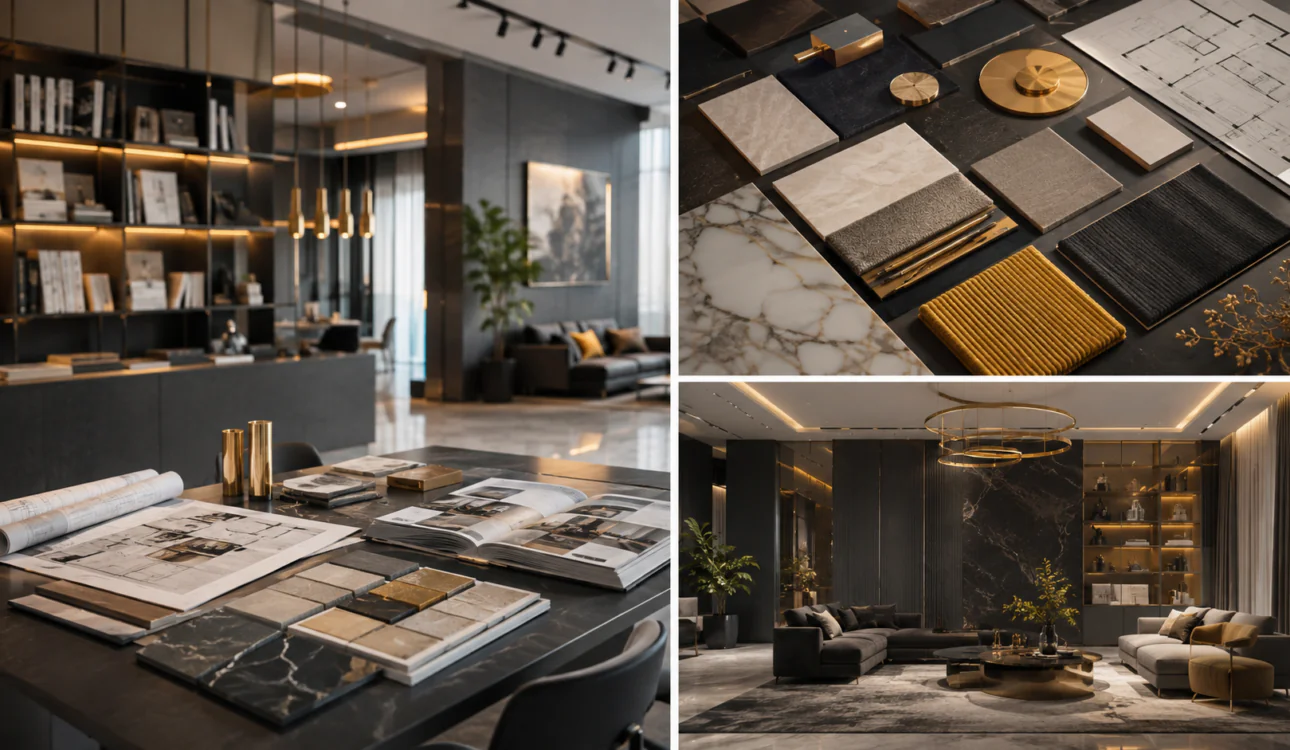
An interior design company profile is more than a collection of company details. It is a professional presentation of your brand, design expertise, services, portfolio, experience, values, and ability to deliver high-quality interior projects. A well-written company profile can help potential clients understand what your business does, why they should trust you, and what makes your design services different.
For interior designers, architects, contractors, and turnkey interior companies, a professional profile can be used on a website, company brochure, proposal, presentation, PDF, social media, business listing, or client pitch.
A strong profile should answer three important questions quickly:
- Who are you?
- What interior design services do you provide?
- Why should a client choose your company?
This guide explains how to create a professional interior design company profile, what information to include, how to structure it, and what to consider when using an interior design company profile template Word or another editable format.

What Is an Interior Design Company Profile?
An interior design company profile is a professional document or web page that introduces an interior design business to prospective clients, architects, developers, homeowners, and commercial organizations.
It typically presents the company’s:
- Background and history
- Mission and vision
- Interior design services
- Design approach
- Residential and commercial expertise
- Project portfolio
- Team and professional expertise
- Materials and design standards
- Project execution process
- Quality commitments
- Client experience
- Contact information
The purpose is not simply to describe the company. It is to communicate experience, credibility, design capability, and value.
For example, a residential interior design company may focus its profile on modular kitchens, living rooms, bedrooms, wardrobes, complete home interiors, space planning, and turnkey execution. A commercial design firm may emphasize offices, retail stores, hospitality spaces, restaurants, and corporate interiors.
Why Is an Interior Design Company Profile Important?
Interior design is a highly visual and trust-driven industry. Clients are often investing a significant amount of money in a project, so they want evidence that the company understands their requirements and can execute the proposed design successfully.
A professional profile helps establish that trust.
1. Builds Brand Credibility
A structured profile makes your company look established and professional. It gives potential customers a clear understanding of your capabilities before they contact you.
2. Communicates Your Expertise
Instead of simply saying that you provide interior design services, your profile can demonstrate your experience through completed projects, design specialties, materials, processes, and professional expertise.
3. Helps Generate Leads
A website visitor or potential client can quickly understand your services and move toward an enquiry or consultation.
4. Supports Client Presentations
An interior design company profile can be shared with homeowners, builders, real estate developers, architects, corporate clients, and procurement teams.
5. Strengthens Your Brand Identity
Your profile can communicate your design philosophy, visual style, values, and approach to creating functional and attractive spaces.
What Should an Interior Design Company Profile Include?
A professional profile should contain enough information to build confidence without overwhelming the reader.
The following structure works well for most interior design businesses.
| Profile Section | Purpose |
|---|---|
| Company Introduction | Introduces the business |
| About Us | Explains background and expertise |
| Mission & Vision | Communicates long-term direction |
| Design Philosophy | Shows your creative approach |
| Services | Explains what you offer |
| Portfolio | Demonstrates actual work |
| Design Process | Shows how projects are managed |
| Team | Builds professional credibility |
| Quality Standards | Communicates reliability |
| Client Benefits | Explains your value |
| Testimonials | Provides social proof |
| Contact Details | Creates an easy conversion path |
Step-by-Step Guide to Creating an Interior Design Company Profile
Step 1: Start With a Strong Company Introduction
The opening section should immediately explain what your company does.
Avoid generic statements such as:
“We are the best interior design company providing the best services.”
Instead, communicate your specialization and customer benefit.
For example:
We are a professional interior design company specializing in thoughtfully planned residential and commercial interiors. Our approach combines functionality, contemporary aesthetics, quality materials, and practical space planning to create interiors that reflect each client’s lifestyle and requirements.
A good introduction should establish your positioning within a few sentences.
Step 2: Add Your Company Story
The “About Us” section should explain how your company approaches interior design.
You can mention:
- When the company was established
- Areas you serve
- Types of projects handled
- Design specialties
- Professional experience
- Company philosophy
- Commitment to quality
- Approach to client collaboration
Do not exaggerate your experience or make unsupported claims. Authentic information creates stronger trust than impressive-sounding but unverifiable statements.
Step 3: Explain Your Design Philosophy
Your design philosophy helps differentiate your company from competitors.
For example, your philosophy may focus on:
- Function-first design
- Minimalist interiors
- Luxury residential interiors
- Sustainable materials
- Smart storage
- Contemporary architecture
- Traditional Indian aesthetics
- Space-efficient planning
- Personalized interiors
Explain how this philosophy influences your actual projects.
Step 4: Clearly Present Your Interior Design Services
Your services section should be easy to scan.
Common services include:
Residential Interior Design
Residential services can cover apartments, villas, independent houses, penthouses, and luxury residences.
Typical spaces include:
- Living rooms
- Bedrooms
- Modular kitchens
- Dining areas
- Home offices
- Walk-in wardrobes
- Bathrooms
- Entryways
- Balconies
- Entertainment areas
Commercial Interior Design
Commercial projects may include:
- Corporate offices
- Retail stores
- Restaurants
- Cafés
- Hotels
- Clinics
- Showrooms
- Co-working spaces
Commercial interiors require particular attention to customer experience, workflow, branding, durability, safety, and efficient use of space.
Turnkey Interior Solutions
A turnkey service can coordinate multiple stages of a project under one professional team.
Depending on the company, this may include:
- Initial consultation
- Site measurement
- Requirement analysis
- Concept development
- Space planning
- 3D visualization
- Material selection
- Detailed drawings
- Vendor coordination
- Manufacturing
- Installation
- Final handover
Clearly explain which stages your company actually handles.
What Makes a Professional Interior Design Company Profile Effective?
A high-quality profile should be specific, visual, credible, and client-focused.
Include Real Project Information
Whenever possible, present genuine projects with relevant details such as:
- Project type
- Location
- Design style
- Approximate area
- Scope of work
- Major design challenges
- Solutions implemented
- Materials used
- Project outcome
This turns a generic portfolio into evidence of expertise.
Focus on Client Problems
Instead of only describing what your company does, explain how your services solve common client problems.
For example:
Client challenge: Limited apartment space.
Design solution: Customized storage, multifunctional furniture, optimized circulation, vertical storage, and carefully planned lighting.
This makes your profile more persuasive.
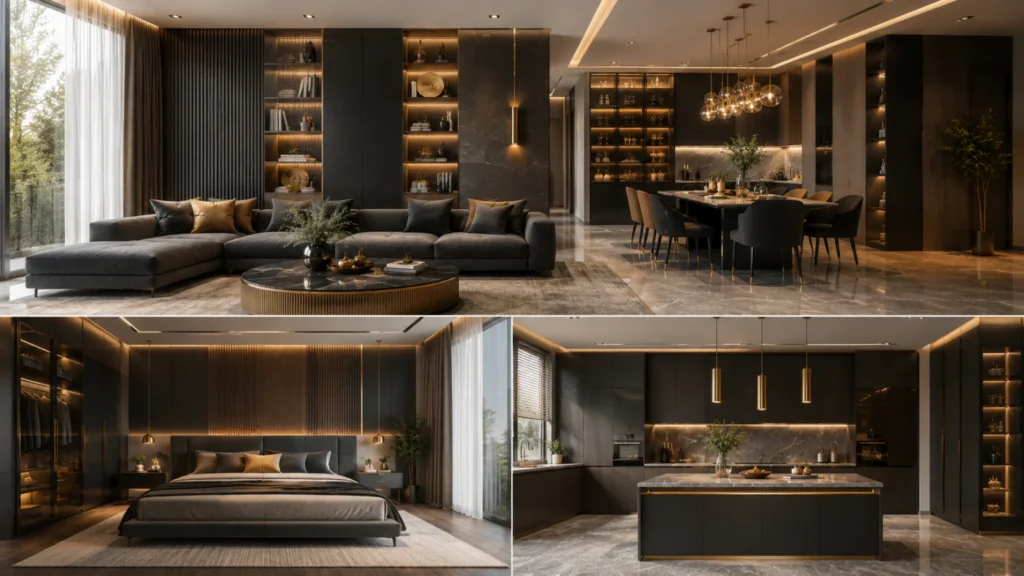
Interior Design Company Profile vs Portfolio
A company profile and portfolio serve different purposes.
| Feature | Company Profile | Portfolio |
|---|---|---|
| Company introduction | Yes | Limited |
| Services | Yes | Sometimes |
| Company philosophy | Yes | Rarely |
| Team information | Yes | Sometimes |
| Project photographs | Selected | Main focus |
| Project details | Overview | Detailed |
| Client testimonials | Yes | Optional |
| Business credentials | Yes | Limited |
| Main purpose | Build trust | Demonstrate design work |
The strongest presentation often combines both. The company profile establishes credibility, while the portfolio provides visual proof.
How to Use an Interior Design Company Profile Template Word
An interior design company profile template Word can make document creation faster because the basic structure, headings, spacing, and page layout are already prepared.
However, avoid simply replacing the template’s company name and leaving generic content unchanged.
Customize the document with:
- Your company name
- Logo
- Brand colors
- Company introduction
- Original photographs
- Services
- Project descriptions
- Design philosophy
- Team information
- Testimonials
- Contact details
- Website and social profiles
Interior Design Company Profile Template Structure
A practical editable structure can look like this:
Page 1: Cover page
Page 2: About the company
Page 3: Mission, vision, and values
Page 4: Design philosophy
Page 5: Residential services
Page 6: Commercial services
Page 7: Turnkey solutions
Page 8: Design and execution process
Page 9: Project portfolio
Page 10: Team and expertise
Page 11: Quality standards and client benefits
Page 12: Testimonials and achievements
Page 13: Contact information
The number of pages should depend on how much genuine information and project evidence your company has.
Interior Design Company Profile Template: Content Checklist
Before publishing or sending your company profile, review every section.
Company Information
- Company name
- Logo
- Company introduction
- Established year, if relevant
- Service locations
- Website
- Contact information
Services
- Residential interior design
- Commercial interior design
- Modular interiors
- Space planning
- 3D visualization
- Custom furniture
- Turnkey execution
- Renovation services, if offered
Trust Signals
- Genuine project photographs
- Client testimonials
- Team information
- Relevant certifications
- Awards, if applicable
- Years of experience, if accurate
- Project statistics, if verifiable
Conversion Elements
- Clear enquiry button
- Phone number
- Email address
- Website
- Consultation call-to-action
- Service locations
How to Write a Strong Interior Design Company Profile
Keep the Language Client-Friendly
Your profile should be understandable to homeowners and business owners, not only architects or designers.
Instead of using excessive technical terminology, explain design concepts in practical language.
For example:
“We create customized storage solutions that maximize available space while maintaining a clean and visually balanced interior.”
This is easier to understand than a paragraph filled with technical terminology.
Show, Don’t Just Tell
Instead of writing:
“We provide high-quality interior design.”
Explain what quality means in your process.
For example:
- Carefully selected materials
- Accurate measurements
- Detailed drawings
- Professional installation
- Quality checks
- Transparent project coordination
Specific details are more convincing than broad claims.
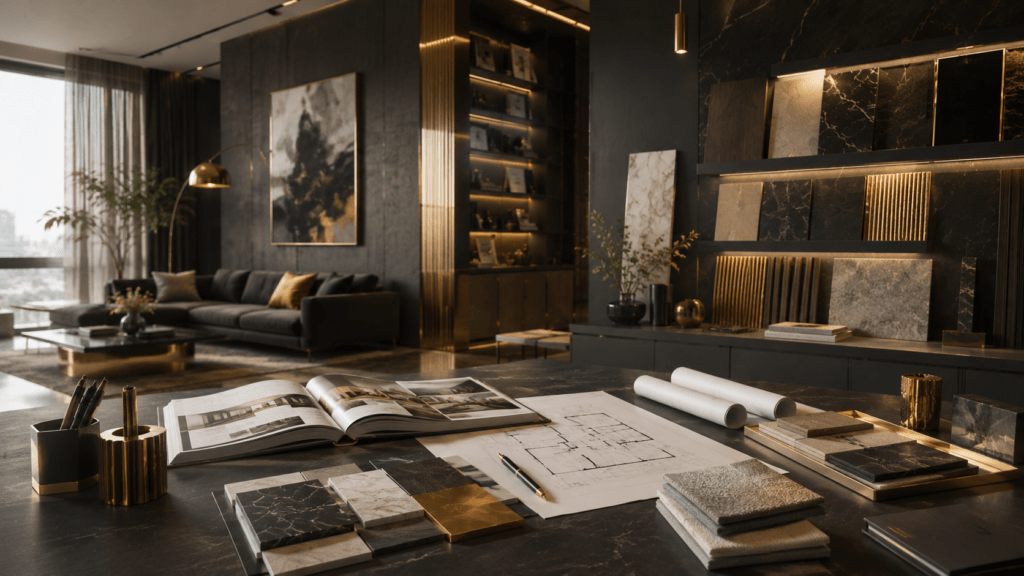
Use Original Photography
Photography can be one of the most valuable elements of an interior design profile.
Use high-quality images of your actual projects whenever possible.
Include different views such as:
- Wide room shots
- Kitchen details
- Storage solutions
- Lighting
- Furniture
- Material finishes
- Architectural details
Avoid using stock photographs as evidence of projects your company did not complete.
Recommended Interior Design Company Profile Structure
A simple structure for a professional company profile is:
Company Overview → About Us → Mission & Vision → Design Philosophy → Services → Process → Portfolio → Team → Quality Standards → Testimonials → Contact
This sequence follows the customer’s natural decision-making journey.
First, they understand who you are. Then they learn what you do, see evidence of your expertise, understand how the project works, and finally receive a clear way to contact you.
How to Make Your Profile More Conversion-Focused
A profile should not only provide information. It should guide potential customers toward the next step.
Use clear calls to action such as:
- Book a Design Consultation
- Discuss Your Project
- Request a Consultation
- Explore Our Portfolio
- Get in Touch With Our Design Team
Avoid aggressive sales language throughout the document. One clear call to action after important sections is usually more effective.
Add a Strong Value Proposition
A value proposition should explain what clients gain from working with you.
For example:
From initial space planning to final installation, our approach focuses on creating functional, personalized interiors with thoughtful detailing and professional project coordination.
The statement should reflect what your company genuinely provides.
SEO Optimization for an Interior Design Company Profile Page
If your company profile is published as a website page, optimize it for users as well as search engines.
The primary keyword interior design company profile can appear naturally in:
- Page title
- Introduction
- One or two relevant headings
- Body content
- Image alt text where appropriate
- URL slug, if suitable
- Meta description
Relevant secondary phrases such as interior design company profile template and interior design company profile template Word can be incorporated where they genuinely fit the search intent.
Avoid repeating the keyword in every paragraph. Search engines increasingly evaluate topical relevance, usefulness, context, and user experience rather than rewarding excessive keyword repetition.
Suggested SEO-Friendly URL
/interior-design-company-profile/
A short, descriptive URL is easier for users and search engines to understand.
How to Make the Profile Useful for AI Overviews and Featured Snippets
Search-friendly content should provide direct answers to common questions.
For example:
What should an interior design company profile include?
An interior design company profile should include the company’s introduction, design philosophy, services, portfolio, project process, team expertise, quality standards, client testimonials, and contact information.
This concise answer can be followed by deeper information.
Use:
- Clear headings
- Short paragraphs
- Definition-style answers
- Lists
- Comparison tables
- Step-by-step processes
- Frequently asked questions
This structure makes information easier for users and search systems to understand.
Common Mistakes to Avoid
1. Using Generic Marketing Statements
Claims such as “best,” “number one,” or “leading” should be supported by evidence or avoided.
2. Overloading the Profile With Text
Interior design is visual. Use a balance of text, photographs, project details, and whitespace.
3. Using Poor-Quality Images
Blurry, badly cropped, or inconsistent photographs can reduce perceived professionalism.
4. Ignoring the Target Audience
A luxury residential profile should not read exactly like a commercial office design profile.
5. Hiding Contact Information
Make it easy for interested visitors to contact the company.
6. Copying Another Company’s Profile
Copied descriptions can weaken credibility, create originality problems, and make your company appear generic.
7. Making Unverified Claims
Only publish information that your company can genuinely support.
Interior Design Company Profile: Final Quality Checklist
Before publishing the profile, ask:
- Does the opening clearly explain what the company does?
- Are the services easy to understand?
- Is the design philosophy distinctive?
- Are project photographs genuine and high quality?
- Are portfolio projects explained clearly?
- Does the profile demonstrate expertise?
- Are testimonials authentic?
- Is the company’s service area clear?
- Are contact details easy to find?
- Are claims accurate and verifiable?
- Is the content original?
- Is the language easy to understand?
- Is the profile optimized for relevant search intent?
- Are unnecessary keyword repetitions removed?
- Is there a clear next step for potential clients?
Final Thoughts
A professionally prepared interior design company profile can become an important sales and branding asset. It gives prospective clients a complete picture of your company, from design philosophy and services to project execution and portfolio experience.
Whether you are creating a profile for a residential interior design studio, commercial design firm, architecture practice, or turnkey interior company, focus on clarity, authenticity, visual quality, and evidence of expertise.
An interior design company profile template Word can provide a useful starting structure, but the final document should be customized with your company’s genuine story, services, projects, photographs, credentials, and client experience.
The strongest profile does not simply say that your company creates beautiful interiors. It demonstrates how you work, what problems you solve, what expertise you bring, and why clients can confidently choose your services.
An interior design company profile is a professional document or webpage that introduces an interior design business, its services, expertise, design philosophy, projects, team, process, and contact information.
It should generally include the company introduction, about section, mission and vision, design philosophy, services, project portfolio, design process, team expertise, testimonials, credentials, and contact information.
You can use it on your website, company presentation, PDF brochure, proposal documents, business pitches, social media, email proposals, business listings, and client meetings.
Yes. An editable Word template can provide a useful structure for creating a professional profile. However, it should be customized with original company information, project photographs, services, branding, and genuine credentials.
There is no fixed length. A concise company profile may be several pages, while a detailed profile with portfolios and project case studies may be longer. The ideal length is enough to demonstrate expertise without adding unnecessary information.