
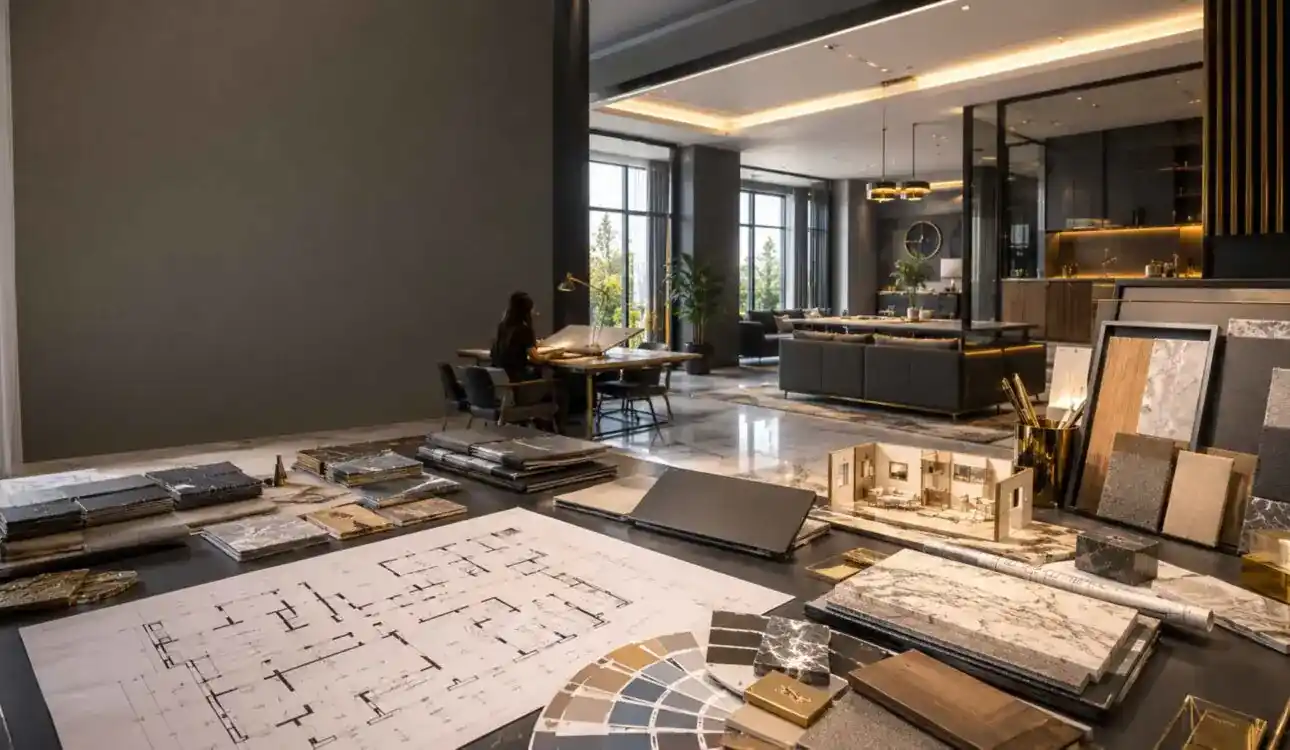
Choosing a career after Class 12 can feel overwhelming, especially when you want a profession that combines creativity, technology, and strong career opportunities. If you enjoy designing spaces, choosing colours, working with furniture, creating layouts, and turning ideas into beautiful and functional environments, interior design can be an excellent career option.
But how do you actually enter this field?
If you are wondering how to become an interior designer after 12th, the process is relatively straightforward: complete your Class 12 education, choose a suitable interior design course, develop practical and software skills, gain real-world experience through internships or projects, build a strong portfolio, and then start working with an interior design company, architectural firm, furniture brand, or as a freelancer.
This guide explains the complete pathway, including interior design courses after 12th, eligibility, course duration, skills, career opportunities, salary expectations, and practical steps to start your career.
What Does an Interior Designer Do?
An interior designer plans and develops interior spaces so they are attractive, comfortable, functional, and suitable for the client’s requirements.
Interior designers can work on residential homes, apartments, offices, restaurants, hotels, retail stores, healthcare spaces, educational buildings, and other commercial environments.
Their responsibilities may include:
- Understanding client requirements and budgets
- Creating space plans and furniture layouts
- Selecting colours, materials, textures, and finishes
- Designing ceilings, walls, flooring, and lighting concepts
- Preparing 2D drawings and 3D visualisations
- Coordinating with contractors and vendors
- Selecting furniture and decorative elements
- Preparing estimates and project specifications
- Monitoring design execution
- Presenting concepts to clients
Interior design is therefore more than simply decorating a room. Professional designers combine creativity, technical knowledge, space planning, materials, construction understanding, communication, and project management.
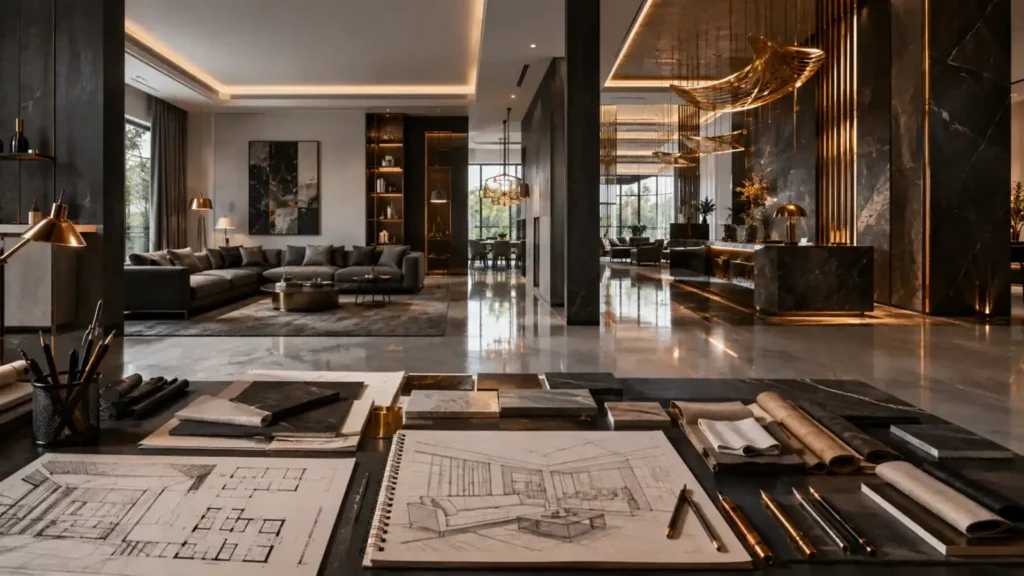
How to Become an Interior Designer After 12th
The simplest career pathway can be divided into six practical stages:
- Complete Class 12.
- Choose an appropriate interior design course.
- Learn design principles and technical skills.
- Master industry-standard design software.
- Complete internships and practical projects.
- Build a professional portfolio and apply for jobs or start freelancing.
You do not necessarily need to follow exactly the same educational route as every other designer. Some professionals enter the industry through bachelor’s degrees, while others begin with diplomas or specialised courses and develop their careers through practical experience.
Step 1: Complete Your 12th Standard
The first requirement is completing Class 12 from a recognised board.
Students from different academic streams can consider interior design, although specific eligibility requirements depend on the institution and course.
For many undergraduate programs, colleges may accept students from:
- Arts
- Commerce
- Science
- Other recognised Class 12 streams
Some institutions may specify minimum marks or particular subject requirements, so always check the eligibility criteria of the specific course before applying.
Do You Need to Study Science to Become an Interior Designer?
No. Science is not universally required to become an interior designer.
Students from Arts, Commerce, and Science backgrounds can pursue interior design programs, depending on the eligibility criteria of the institution.
However, subjects and skills related to drawing, mathematics, computer applications, art, design, and technical concepts can be useful.
Step 2: Choose the Right Interior Design Course After 12th
One of the most important decisions is selecting the right course.
There are several pathways available after Class 12, including diploma programs, bachelor’s degrees, certificates, and specialised professional courses.
Common Interior Design Courses After 12th
| Course Type | Typical Duration | Best For |
|---|---|---|
| Certificate Course | A few months to 1 year | Beginners wanting basic skills |
| Diploma in Interior Design | Around 1–2 years | Students seeking practical training |
| Advanced Diploma | Around 2 years | Students wanting deeper practical knowledge |
| Bachelor’s Degree | Usually 3–4 years | Students seeking a comprehensive undergraduate education |
| Specialised Software Course | A few weeks to several months | Learning specific design tools |
Course duration varies by institution, curriculum, and program structure.
Which Course Should You Choose?
The best course depends on your career objective.
Choose a bachelor’s degree if:
- You want a comprehensive undergraduate qualification.
- You are comfortable investing several years in education.
- You want broader exposure to design theory and practice.
- You may later pursue advanced education.
Choose a diploma if:
- You want to enter the industry relatively quickly.
- You prefer practical and skill-focused learning.
- You want to develop a portfolio alongside your education.
- You have a limited time or budget.
Choose a certificate course if:
- You want to explore interior design before committing to a longer program.
- You are changing careers.
- You mainly need introductory knowledge or specific skills.
Step 3: Learn the Fundamentals of Interior Design
A professional interior designer needs more than artistic creativity.
Your course should help you understand fundamental design principles such as:
- Balance
- Proportion
- Scale
- Rhythm
- Contrast
- Harmony
- Colour theory
- Space planning
- Lighting
- Furniture planning
- Materials and finishes
- Ergonomics
- Building services
- Basic construction concepts
For example, a designer needs to understand why a particular sofa is suitable for a room’s dimensions, how much circulation space should remain around furniture, and how lighting affects the appearance and usability of a space.
These fundamentals help turn creative ideas into practical designs.
Step 4: Develop Interior Design Software Skills
Technology has become an important part of modern interior design.
Employers and clients often expect designers to communicate concepts using drawings, 3D models, renders, presentations, and technical documentation.
Depending on your course and career goals, consider learning tools such as:
- AutoCAD
- SketchUp
- 3ds Max
- Revit
- Photoshop
- V-Ray
- Enscape
- Lumion
- Canva for presentations and basic visual communication
You do not need to master every software program immediately.
Start with the tools most relevant to your desired career path and gradually expand your technical skills.
A Practical Software Learning Order
Beginner:
- AutoCAD basics
- SketchUp basics
- Photoshop or another image-editing tool
Intermediate:
- Advanced AutoCAD
- Detailed SketchUp modelling
- Rendering software
- Presentation development
Advanced:
- BIM workflows such as Revit
- Advanced rendering
- Detailed documentation
- Project coordination
The goal isn’t to collect software certificates. The goal is to produce professional work.
Step 5: Build a Strong Interior Design Portfolio
A portfolio can be one of the most important assets when applying for your first interior design job.
It demonstrates what you can actually do.
Your portfolio can include:
- Concept boards
- Mood boards
- Floor plans
- Furniture layouts
- Colour palettes
- Material selections
- 3D models
- Interior renders
- Lighting concepts
- Residential projects
- Commercial design concepts
- Before-and-after redesign concepts
- College projects
- Personal design experiments
If you have no professional projects yet, create your own.
For example, choose a fictional 2BHK apartment and develop a complete concept from space planning to 3D visualisation. This demonstrates initiative and practical ability even before you have your first client.
Step 6: Get an Internship or Practical Experience
Classroom knowledge alone is not enough.
An internship allows you to understand how actual projects work.
During an internship, you may learn about:
- Client meetings
- Site measurements
- Material selection
- Vendor coordination
- BOQs and estimates
- Drawings
- Site supervision
- Furniture specifications
- Project timelines
- Design revisions
- Contractor communication
This practical exposure helps bridge the gap between education and employment.
Internship Checklist
- Work with a professional interior design company or studio.
- Visit real project sites when possible.
- Learn how measurements are taken.
- Observe client presentations.
- Understand material specifications.
- Practice preparing drawings.
- Learn basic estimation.
- Ask experienced designers for feedback.
- Save appropriate work for your portfolio.
Always obtain permission before displaying confidential client work publicly.
Step 7: Develop the Skills Employers Look For
Successful interior designers combine creative and professional abilities.
Technical Skills
You should gradually develop:
- CAD drafting
- 3D modelling
- Rendering
- Space planning
- Material knowledge
- Lighting knowledge
- Basic construction knowledge
- Furniture planning
- Presentation skills
Soft Skills
Soft skills are equally important:
- Communication
- Creativity
- Problem-solving
- Time management
- Attention to detail
- Client management
- Teamwork
- Negotiation
- Adaptability
- Presentation confidence
A designer may create an excellent concept, but if they cannot explain the idea to a client or coordinate with contractors, delivering the project becomes difficult.
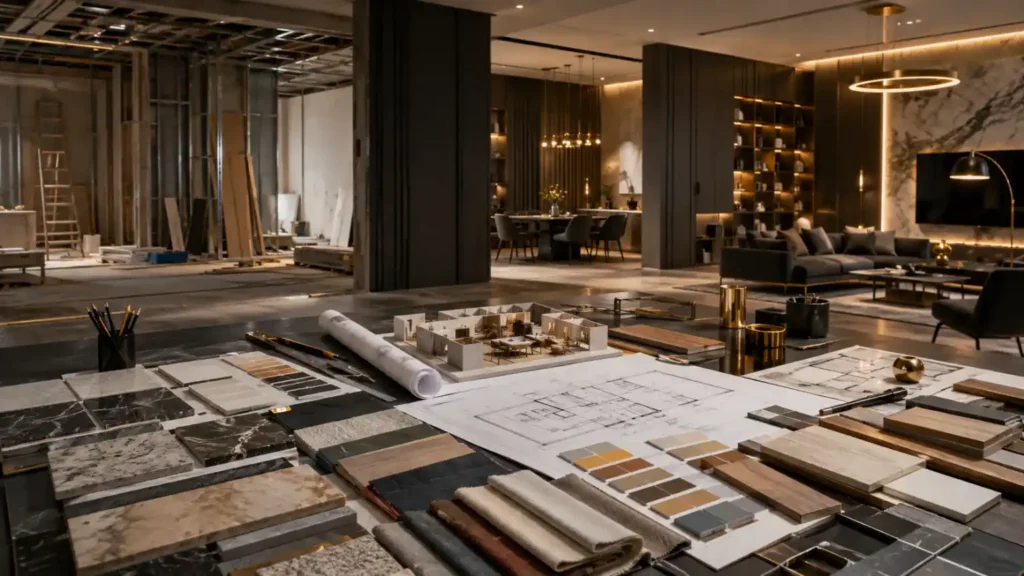
Interior Design Courses After 12th: How Many Years?
The answer depends on the course you choose.
A certificate program may take only a few months, while diploma programs commonly take around one to two years. Bachelor’s programs generally require several years of full-time study.
Therefore, interior design courses after 12th can range from a few months to several years, depending on the qualification and institution.
Instead of choosing a course only because it is shorter, compare:
- Course curriculum
- Duration
- Practical training
- Faculty experience
- Software training
- Internship opportunities
- Placement support
- Portfolio development
- Industry projects
- Total fees
A shorter course may help you enter the field faster, but a longer program may provide broader academic and technical exposure.
Interior Design Courses After 12th Salary: What Can You Expect?
Salary is one of the most common questions students ask before choosing this career.
There is no single fixed salary for interior designers. Earnings can vary significantly based on:
- Qualification
- Skills
- Portfolio quality
- Software expertise
- Experience
- City
- Employer
- Project type
- Specialisation
- Freelance or salaried work
Indicative Career Progression
| Career Stage | Typical Role | Earning Potential |
|---|---|---|
| Beginner | Junior Interior Designer | Entry-level compensation |
| Early Career | Interior Designer | Higher compensation with experience |
| Experienced | Senior Interior Designer | Stronger earning potential |
| Specialist | Project/Design Lead | Higher responsibility and compensation |
| Independent | Freelancer/Studio Owner | Variable, depending on projects and clients |
These categories are more useful than promising a specific salary because actual compensation differs widely between employers and locations.
For students researching interior design courses after 12th salary, the most important point is that your qualification is only one part of your earning potential. Strong software skills, communication, project experience, specialisation, and portfolio quality can significantly influence career progression.
Where Can You Work After Studying Interior Design?
After completing your education and developing practical skills, you can explore several career paths.
Interior Design Companies
You may work on residential or commercial projects under experienced designers.
Architectural Firms
Architectural practices may hire interior designers to work alongside architects and other professionals.
Furniture and Modular Companies
These businesses require designers to create kitchens, wardrobes, living spaces, furniture layouts, and customer presentations.
Real Estate Companies
Developers may need interior professionals for model apartments, showrooms, amenities, and sales environments.
Hospitality Industry
Hotels, restaurants, resorts, and cafés require interior planning and design services.
Freelancing
Experienced designers can work independently and manage their own clients.
Entrepreneurship
After gaining sufficient experience, you can establish your own interior design studio or design-and-execution business.
Interior Designer Career Roadmap After 12th
A simple roadmap looks like this:
Class 12 → Interior Design Course → Design Fundamentals → Software Skills → Portfolio → Internship → Junior Designer → Experienced Designer → Senior/Independent Designer
You don’t need to become an expert immediately.
Focus on building one skill at a time.
First 3 Months
Focus on:
- Design fundamentals
- Sketching
- Colour theory
- Basic space planning
- Software fundamentals
3–6 Months
Work on:
- CAD drawings
- 3D modelling
- Rendering
- Material knowledge
- Personal projects
6–12 Months
Focus on:
- Portfolio development
- Internship applications
- Real-world projects
- Client presentation
- Site knowledge
After 1 Year
Depending on your course and experience, begin applying for:
- Junior interior designer positions
- Design internships
- CAD designer roles
- 3D visualisation roles
- Interior sales/design positions
- Freelance projects
How to Choose the Best Interior Design Course After 12th
Don’t choose a course simply because its advertisement says “100% placement” or “become a designer quickly.”
Use this checklist instead:
- Is the institution recognised or credible?
- Is the curriculum practical?
- Does it teach CAD and 3D software?
- Are real projects included?
- Is internship support available?
- Does the course help build a portfolio?
- Are experienced professionals involved in teaching?
- Are materials and construction covered?
- Are site visits included?
- Does the institute provide career guidance?
- Is the total cost clear?
- Can you see student work before enrolling?
A good program should help you develop capabilities rather than simply provide a certificate.
Degree vs Diploma in Interior Design
| Factor | Degree | Diploma |
|---|---|---|
| Duration | Generally longer | Generally shorter |
| Academic depth | Broader | More focused |
| Practical exposure | Depends on institution | Often skill-oriented |
| Career flexibility | Usually broader | Good for practical entry |
| Time investment | Higher | Lower |
| Suitable for | Long-term academic pathway | Faster skill development |
Neither option automatically guarantees success.
Your choice should depend on your long-term goals, financial situation, learning preferences, and the quality of the institution.

Is Interior Design a Good Career After 12th?
Yes, interior design can be a rewarding career for students who enjoy creativity but are also comfortable with technical and practical work.
The industry offers opportunities across residential, commercial, hospitality, retail, workplace, furniture, and architectural sectors.
However, students should understand that professional interior design is not simply about selecting attractive colours or decorating rooms.
You may need to deal with:
- Tight project deadlines
- Client revisions
- Budget limitations
- Material availability
- Contractor coordination
- Site problems
- Design changes
- Technical drawings
- Project documentation
If you enjoy solving these problems while creating functional spaces, the profession can be a strong fit.
Common Mistakes Students Make After 12th
Choosing a Course Only for the Certificate
A certificate alone does not demonstrate professional ability. Practical skills and portfolio quality matter.
Ignoring Software
Modern designers frequently use digital tools for drafting, modelling, presentations, and visualisation.
Focusing Only on Decoration
Interior design includes space planning, technical drawings, materials, lighting, ergonomics, construction coordination, and more.
Not Creating a Portfolio
Start building your portfolio during your course rather than waiting until graduation.
Avoiding Site Experience
A drawing may look perfect on a computer but behave differently during execution. Site experience teaches practical constraints.
Expecting a High Salary Immediately
Like most creative professions, interior design careers generally develop with experience, skills, networking, and project exposure.
Final Thoughts
Knowing how to become an interior designer after 12th is the first step; building the right skills is what turns that plan into a career.
Start by choosing an appropriate course, but don’t stop at classroom education. Learn professional software, understand materials and construction, develop space-planning skills, complete practical projects, gain site experience, and create a portfolio that demonstrates your abilities.
Your first goal should not be to become the highest-paid designer immediately. Instead, focus on becoming a designer who can solve real problems, communicate ideas clearly, create technically sound drawings, and deliver designs that work in the real world.
With consistent learning, practical exposure, and a strong portfolio, you can progress from a student to a junior designer and eventually move into senior, freelance, specialised, or entrepreneurial interior design roles.
Complete Class 12, choose a suitable interior design course, learn design and software skills, complete practical projects or an internship, build a portfolio, and apply for entry-level jobs or freelance opportunities.
Students from Arts, Commerce, and Science backgrounds may be eligible for interior design courses, depending on the institution. Always check the specific admission requirements before applying.
The duration depends on the qualification. Certificate programs may take a few months, diplomas commonly take around one to two years, while bachelor’s programs generally take several years.
Salary varies according to experience, location, employer, skills, portfolio, and specialisation. Beginners generally earn less than experienced designers, while senior professionals, specialists, freelancers, and business owners may have higher earning potential.
Interior design can be a good career for students who enjoy creativity, technology, problem-solving, space planning, and working with clients. Practical experience and a strong portfolio are important for long-term success.